
Dental implants, planned in 3D
A dental implant replaces the root of a missing tooth with a small titanium post, then supports a crown, bridge or denture designed to look and function like natural teeth.
This picture is hidden in anxiety-friendly mode.
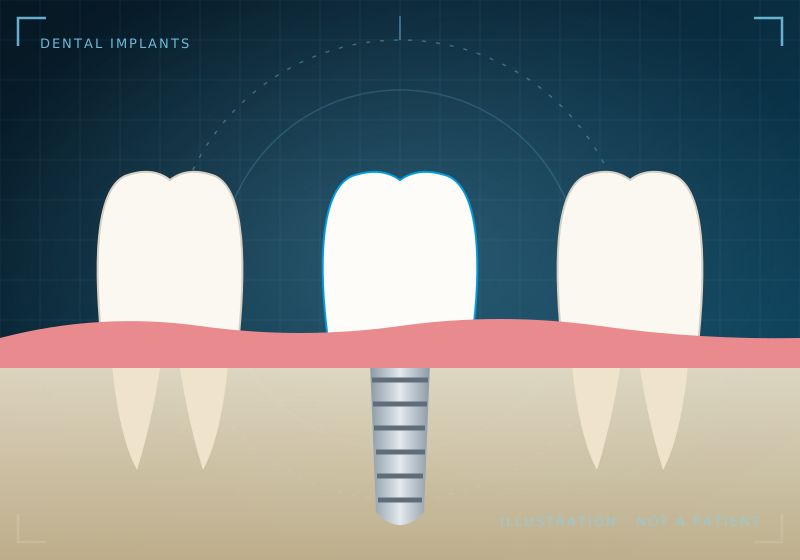
One option for replacing missing teeth
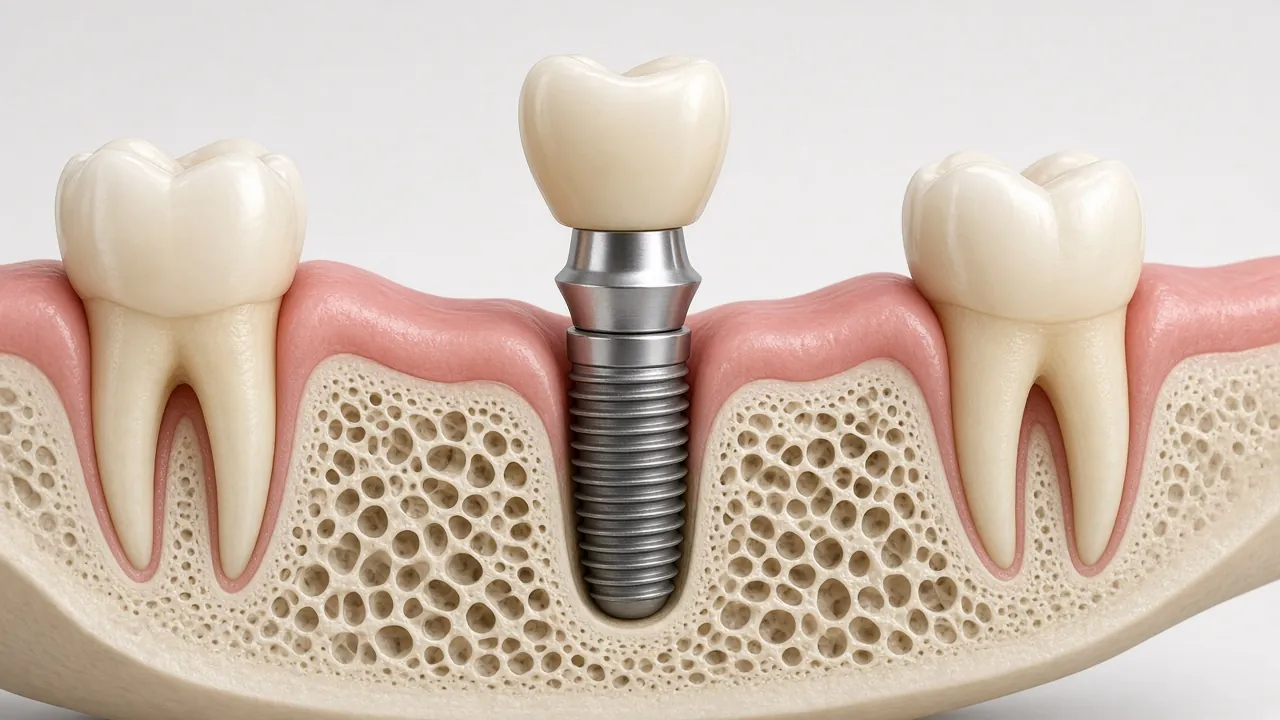
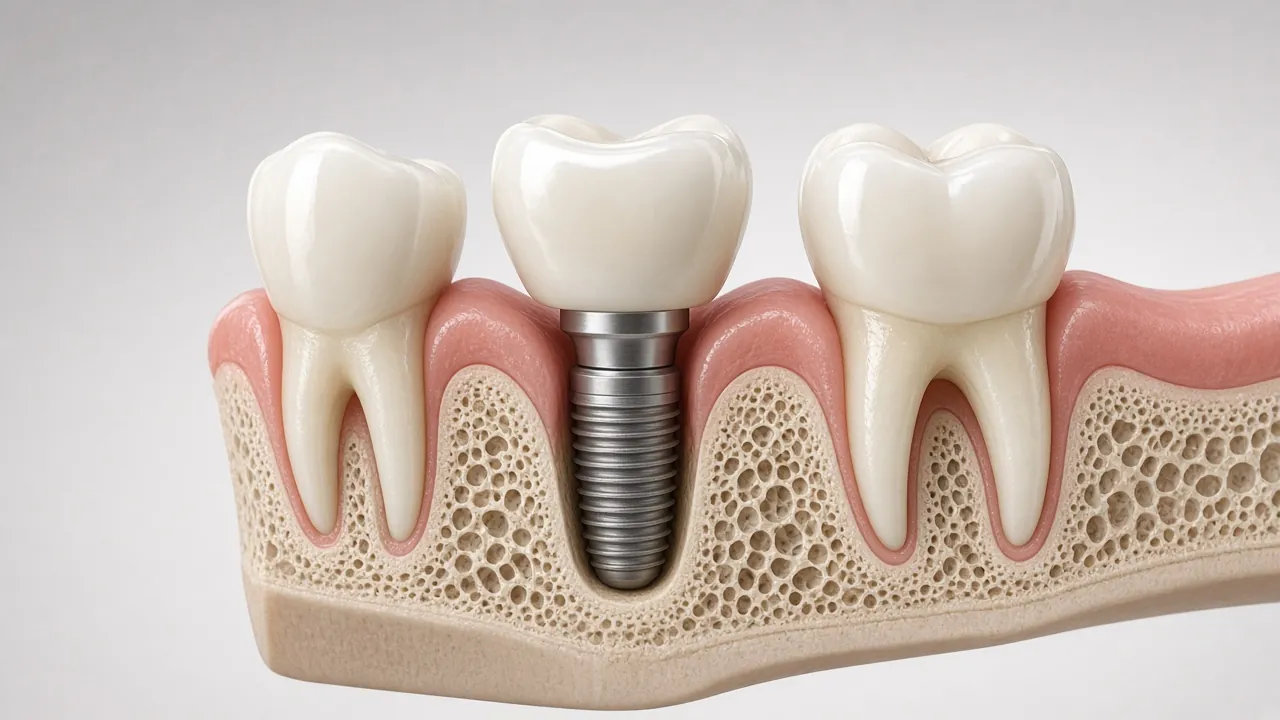
An implant has three parts: a small titanium post that sits in the jawbone like a tooth root, a connector called an abutment, and a crown made to match your other teeth.
- Designed to matchThe crown is designed to match your teeth and bite.
- Protect neighbouring teethUnlike a bridge, they don’t require cutting down adjacent teeth.
- Help preserve boneImplants can reduce the bone loss that follows tooth loss.
- Fixed in placeAn implant crown is fixed, so it doesn’t need denture adhesive.
- Care mattersHow long an implant lasts depends on your health, bite, smoking and home care. Regular check-ups help.
3D CBCT planning · printed surgical guides where suitable.
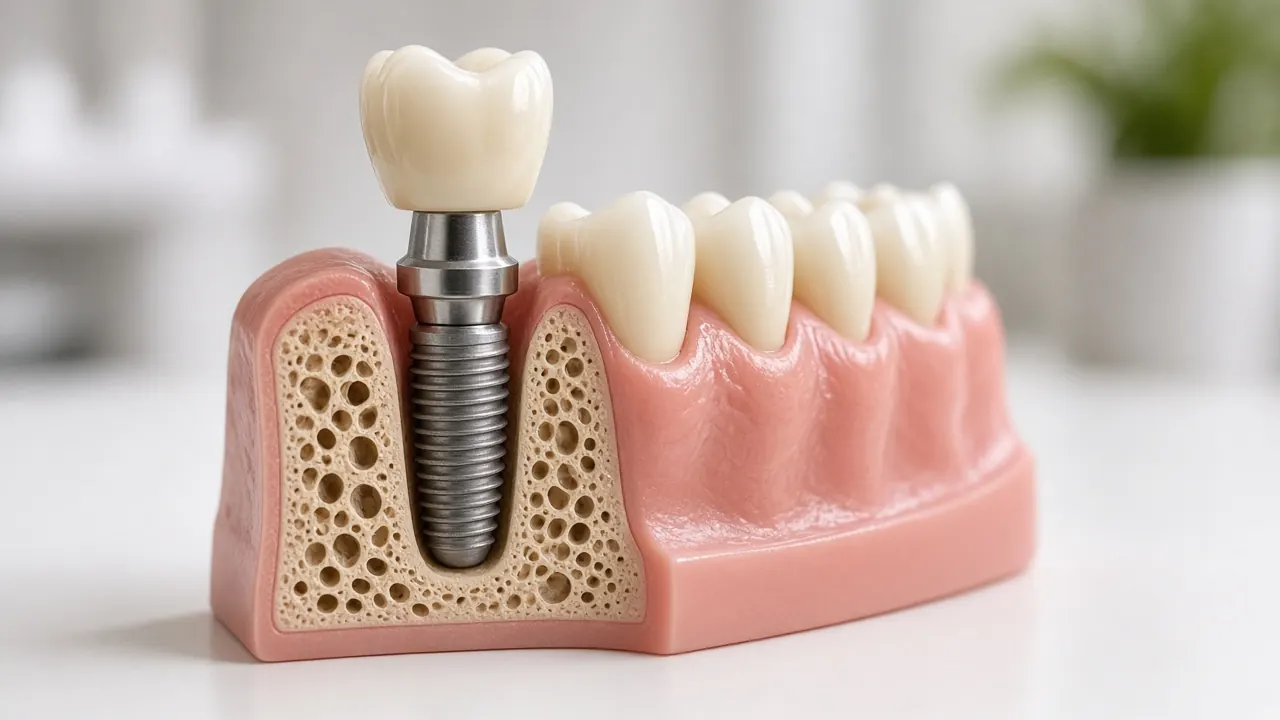
Implant treatment in pictures
Choose a topic, then press play or use the arrows. Captions are on (CC).
Replacing one tooth. How a post, a connector and a crown fill a gap, from start to finish.
Step by step Dental implant: how it works
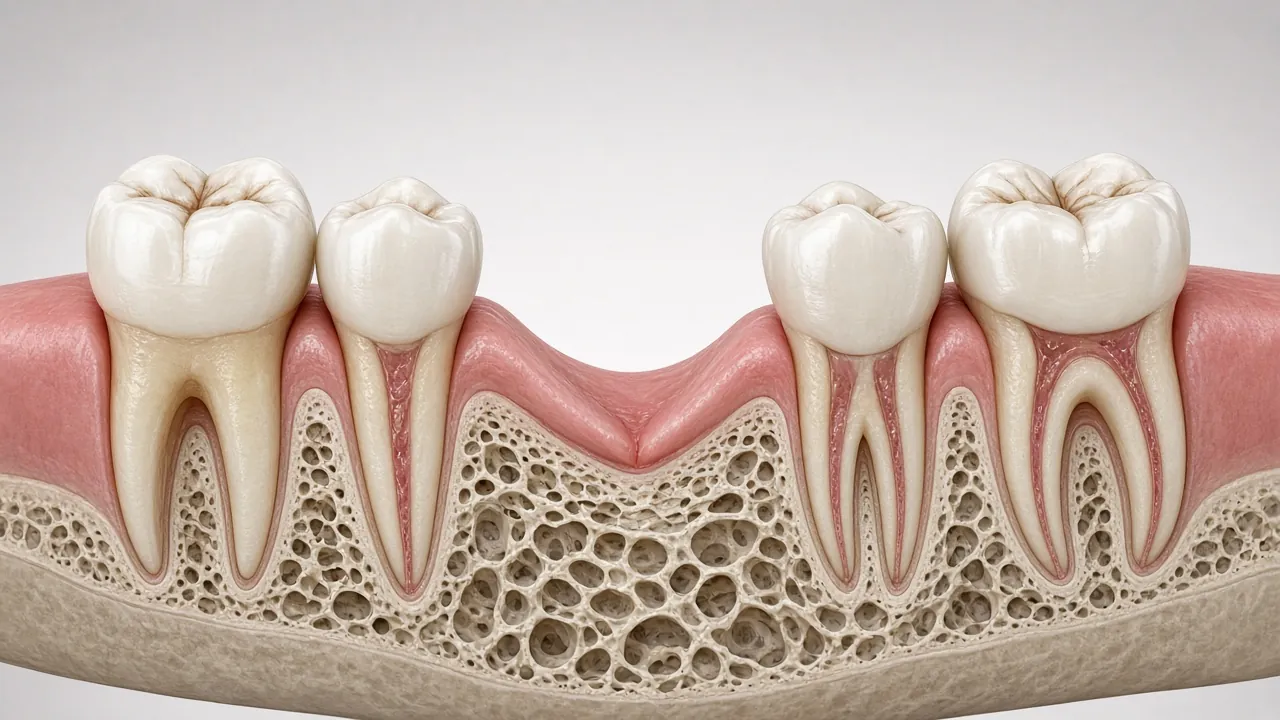
Step 1 A missing tooth leaves a gap in the gum and bone.
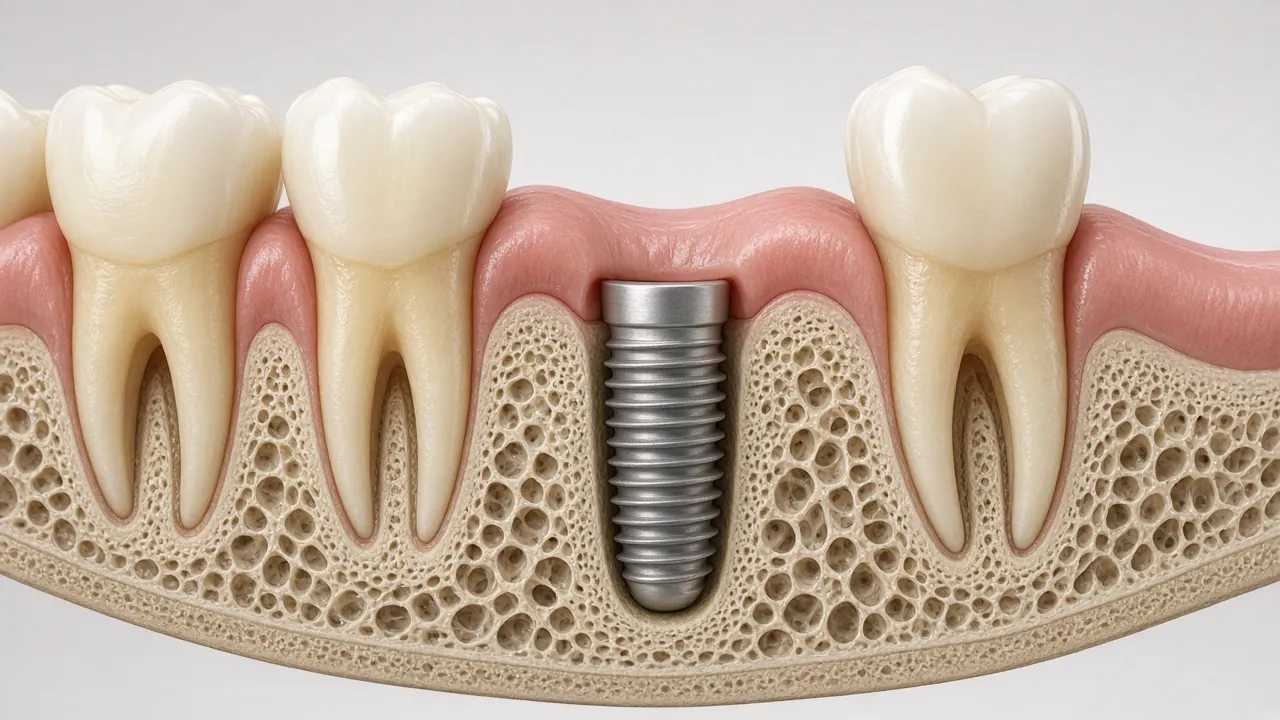
Show transcriptHide transcript (4 steps)
- A missing tooth leaves a gap in the gum and bone.
- A small titanium post is placed in the jawbone, and the bone heals around it over a few months.
- A connector called an abutment is fitted, and a custom crown is made to match your teeth.
- The crown is fixed in place to fill the gap.
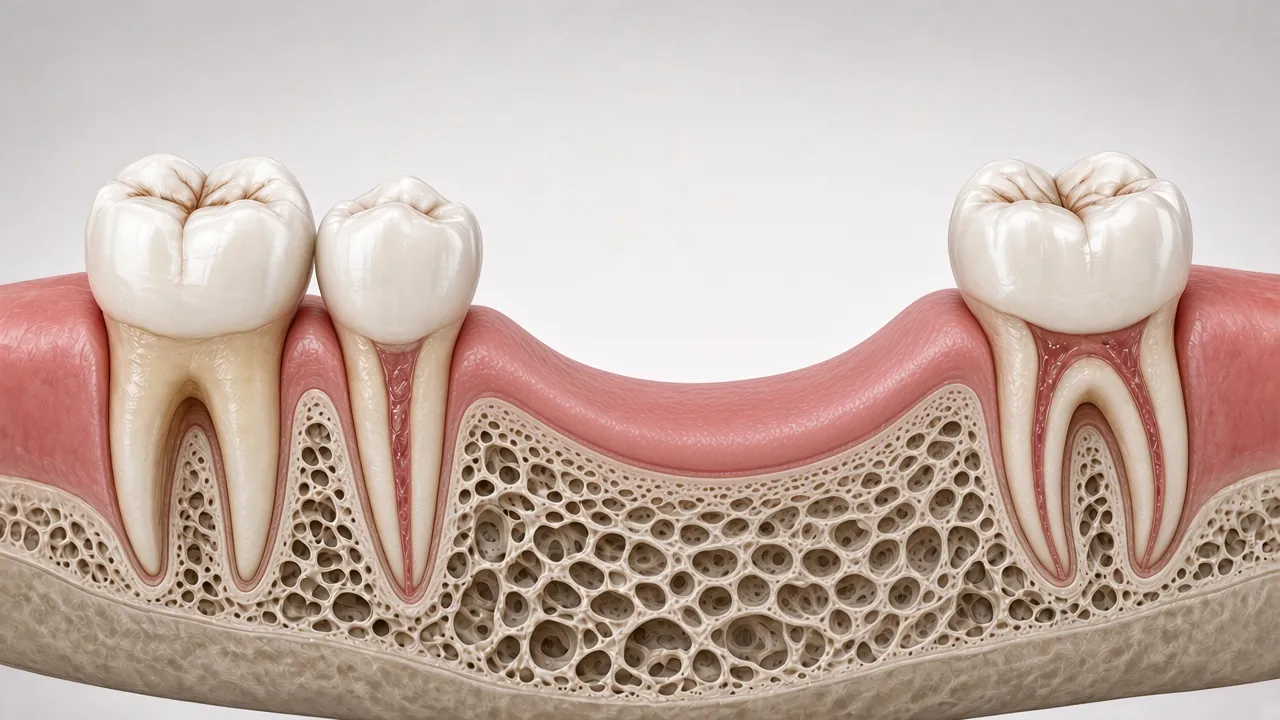
If more bone is needed. If the jawbone has thinned, a bone graft may be suggested first. Not everyone needs one, and your dentist will explain why if you do.
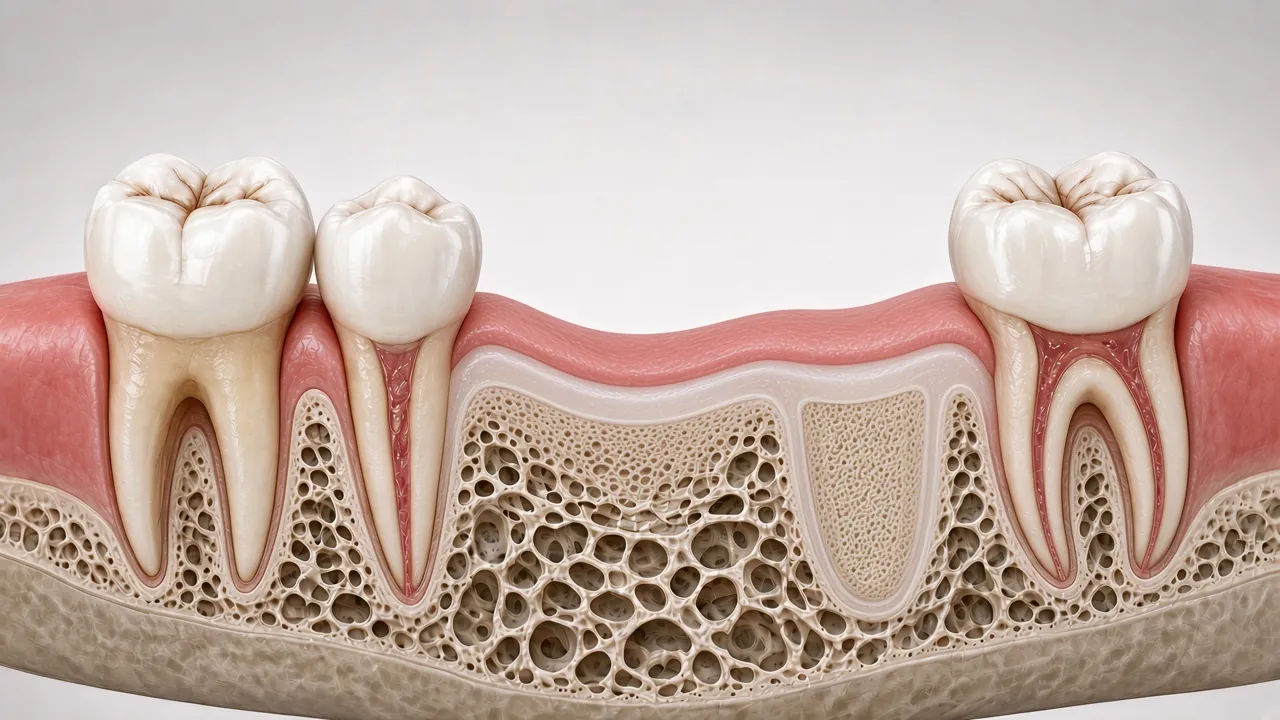
Step by step Bone grafting: how it works
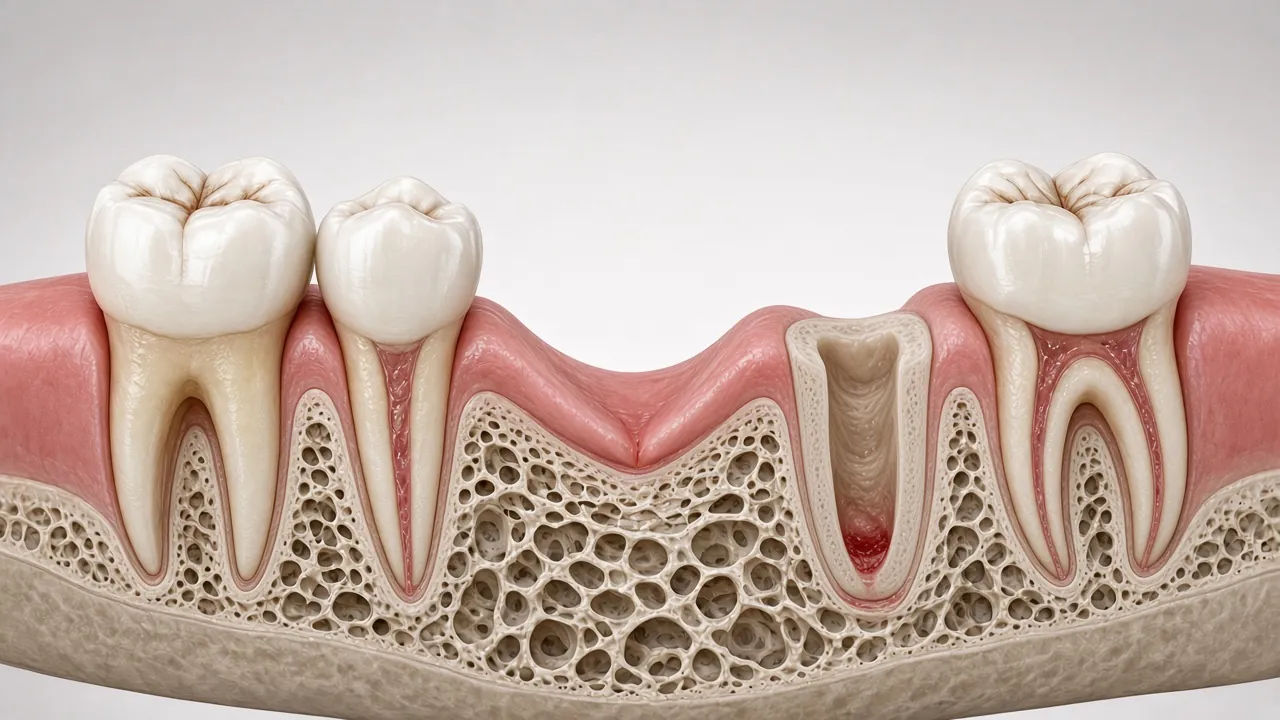
Step 1 After a tooth is removed, the bone around the socket can shrink as it heals.
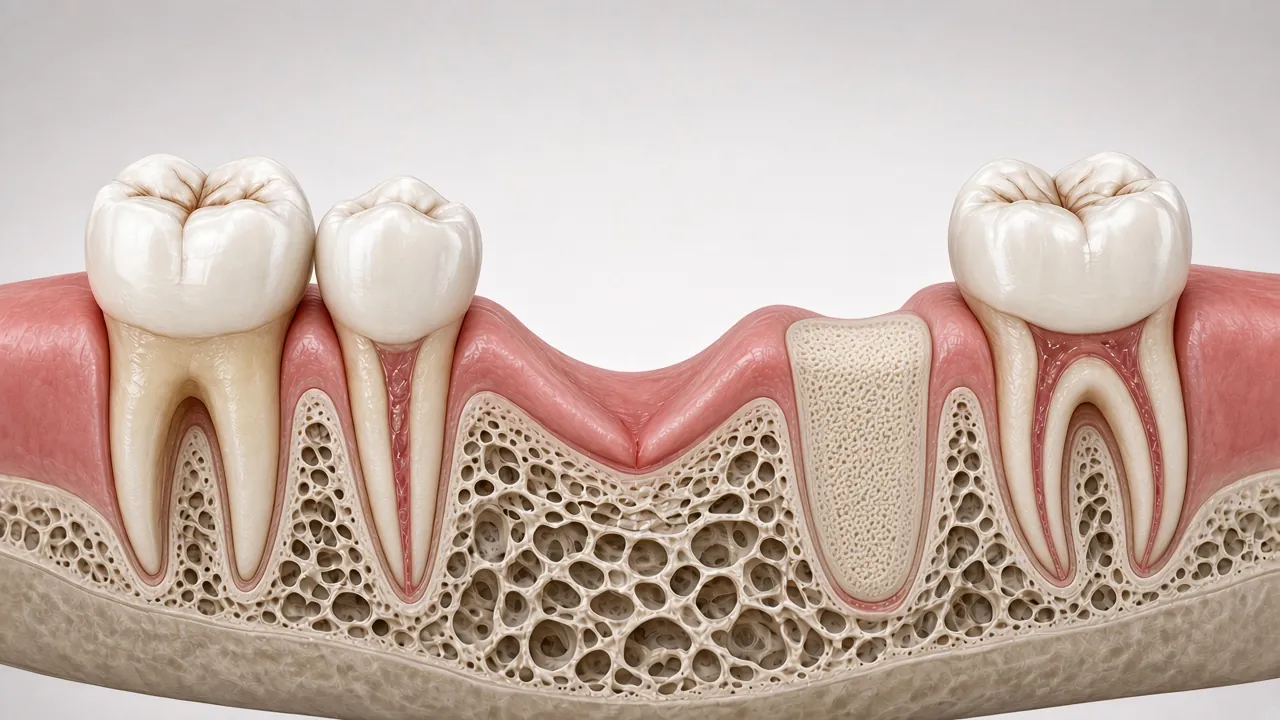
Show transcriptHide transcript (4 steps)
- After a tooth is removed, the bone around the socket can shrink as it heals.
- If there is not enough bone for an implant, a bone graft may be recommended.
- A protective membrane covers the graft while the gum heals over it.
- Over several months, new bone forms, and the site is checked for an implant.
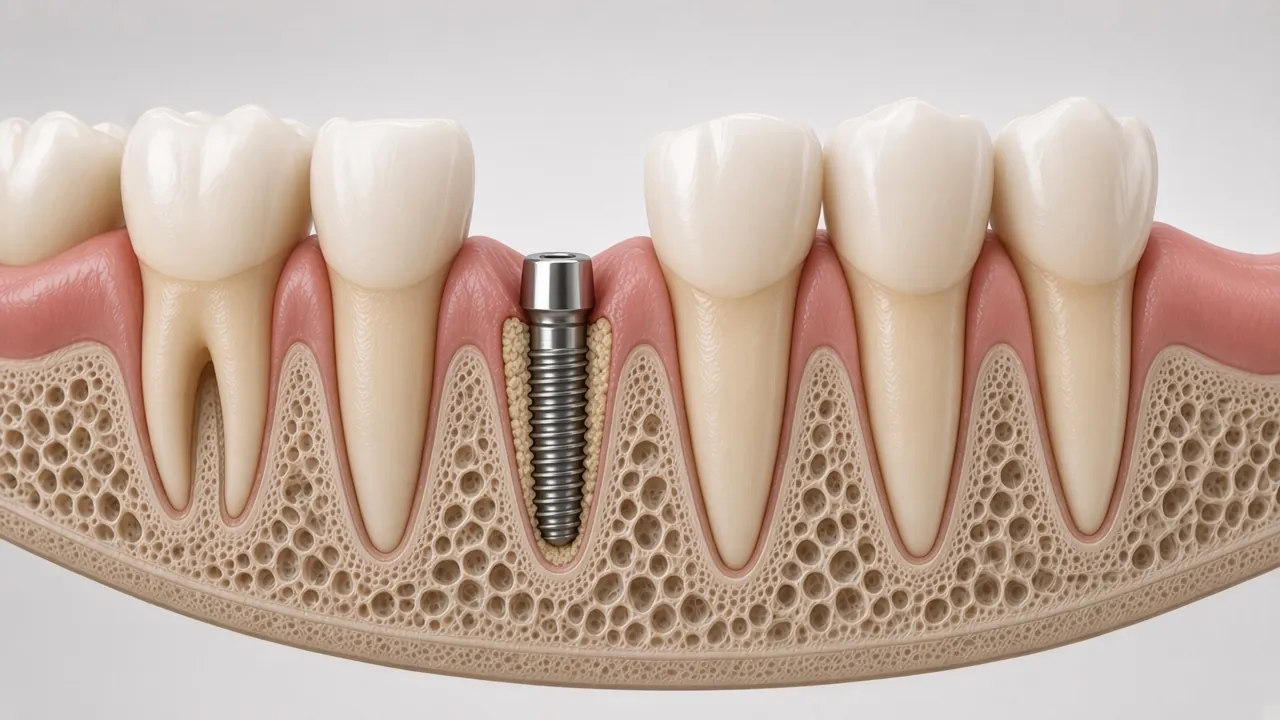
Same-visit implant. Sometimes an implant can go in at the same visit the tooth comes out. It depends on your bone, gums and general health, so it isn’t for everyone.
Step by step Immediate implant: how it works
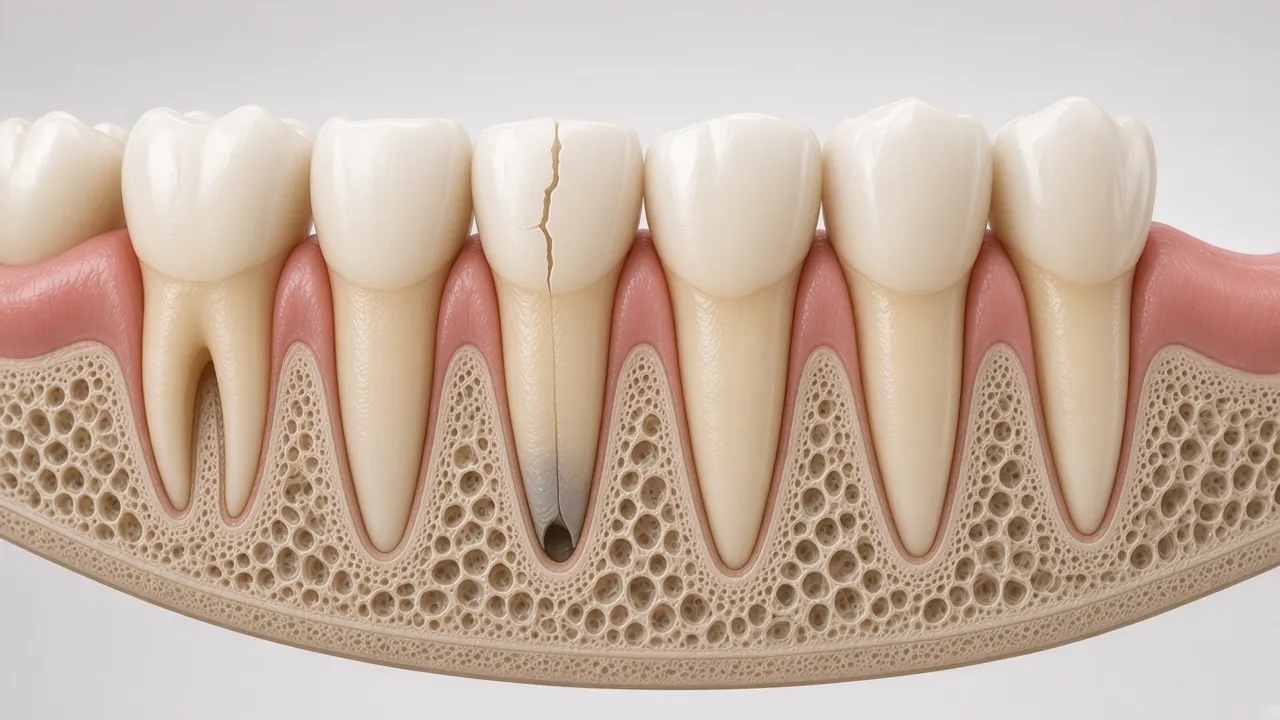
Step 1 A tooth that can’t be saved is checked with a 3D scan to see the bone around it.
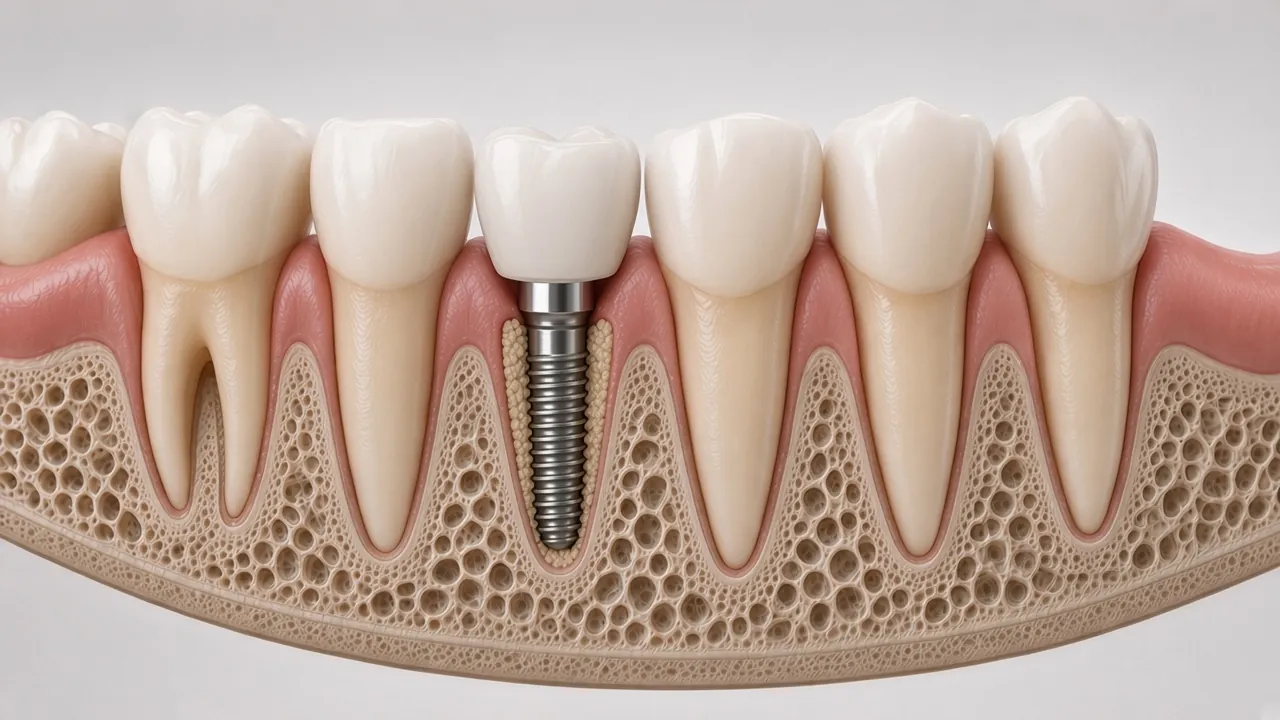
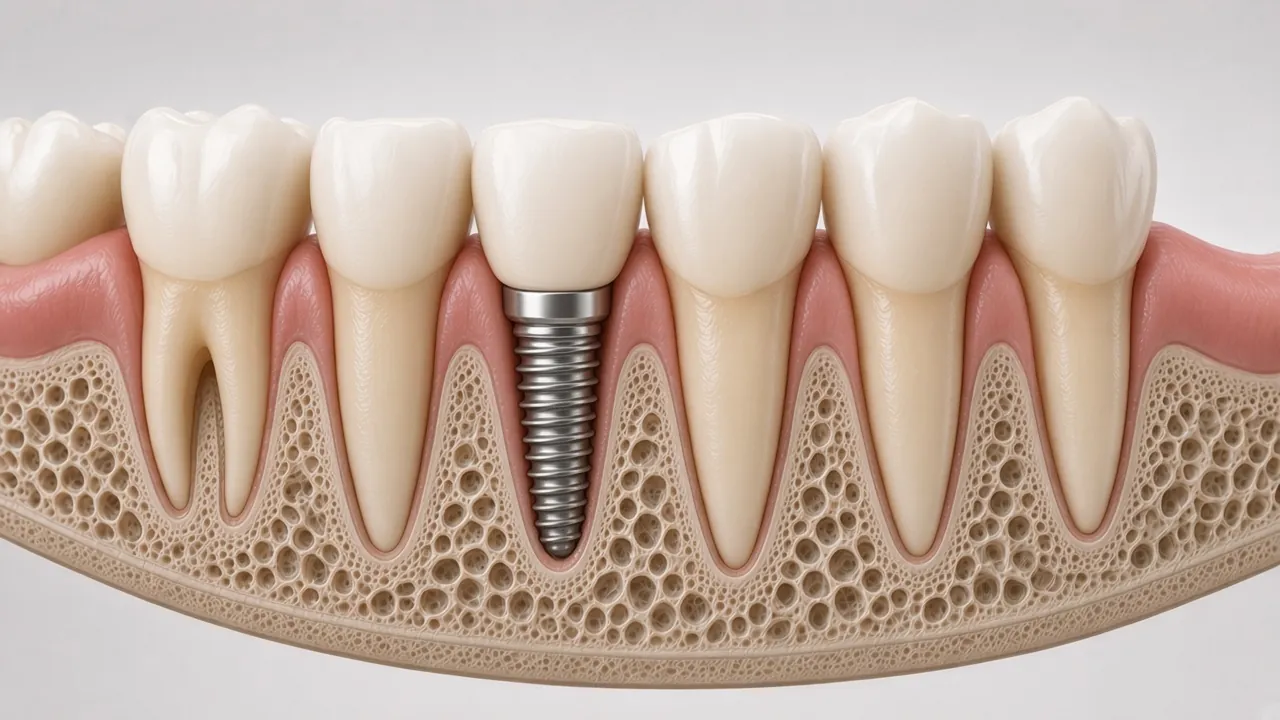
Show transcriptHide transcript (4 steps)
- A tooth that can’t be saved is checked with a 3D scan to see the bone around it.
- The tooth is gently removed, and if the bone allows, an implant is placed in the same visit.
- A temporary tooth may be fitted, kept clear of heavy biting while the bone heals.
- After healing, the final crown is fitted. Not everyone is suitable, so your dentist will advise you.
Treatment facts
Plain-language answers to common questions. General information only: your dentist will explain your own options, risks and costs after examining you.
Is it right for me?
Implants may suit you if
- you are an adult missing one or more teeth, or about to lose one
- your gums are healthy, or gum disease has been treated
- you have enough jawbone, or can have a bone graft
- your general health allows a minor procedure in the chair
Things that can affect healing
- smoking or vaping
- diabetes that isn’t well controlled
- gum disease
- osteoporosis, and some bone medicines (such as bisphosphonates)
- past radiation treatment to the head or neck
Why replace a gap at all? Over time, nearby teeth can tilt into the space, the tooth above can drop down, and the bone where the root was can shrink. Your dentist can tell you whether this is likely for you.
Try the 5-question quick check
Based on your answers. General information only, not a diagnosis. Only a dentist can assess whether a treatment suits you.
What happens
Consultation and 3D scan
We check your teeth, gums and health, take X-rays and a 3D CBCT scan, and talk through all your options. You get a written plan and estimate.
Planning
The implant position is planned on a computer, clear of nerves and sinuses. A 3D printed surgical guide may be made where suitable.
Placing the implant
This is usually done with local anaesthetic, so the area is numb. If more bone is needed, a graft may be done first or at the same time.
often 1–2 hoursHealing
The bone slowly bonds to the implant. A temporary tooth may be worn while you heal.
often a few monthsConnector and crown
The abutment is attached, a digital scan is taken, and your crown is made to fit your bite and match your teeth.
Check-ups
A review about 1 to 2 weeks after surgery, then regular check-ups and cleans to look after the implant.
Times are typical ranges only and are longer after a bone graft. Your dentist will give you your own timeline.
Recovery and aftercare
The first few days
- Some swelling, bruising, tenderness and a little bleeding are common. Swelling is often worst on day 2 or 3 and settles over about a week.
- Eat soft foods and chew on the other side.
- Keep the area clean the way your dentist shows you, and take any medicines as directed.
- Try not to smoke, as it slows healing.
Looking after it long term
- Brush twice a day and clean between your teeth, including around the implant.
- Keep up regular check-ups and cleans.
- Wear a night guard if you grind your teeth, and a mouthguard for contact sport.
When to call us: ring (08) 9330 7115 if you have heavy bleeding, pain or swelling that is getting worse, or a fever. If you have trouble breathing or swallowing, call 000.
Risks to know about
Like any surgery, implant treatment has risks. Your dentist will talk you through the ones that apply to you.
- Infection, bleeding or swelling after surgery.
- Nerve injury: numbness or tingling of the lip, chin or tongue. It can be short term, or in rare cases permanent.
- Sinus problems with implants in the upper back jaw.
- Damage to nearby teeth or their roots.
- The implant not bonding with the bone. This is more likely with smoking, some health conditions or low bone density. It may need to be removed and tried again later.
- Peri-implantitis: gum and bone inflammation around the implant, months or years later.
- Wear and repairs: crowns can chip and screws can loosen over time.
Ways risk is lowered: a full health check, a 3D scan and careful planning, strict sterilisation, good cleaning at home and regular reviews.
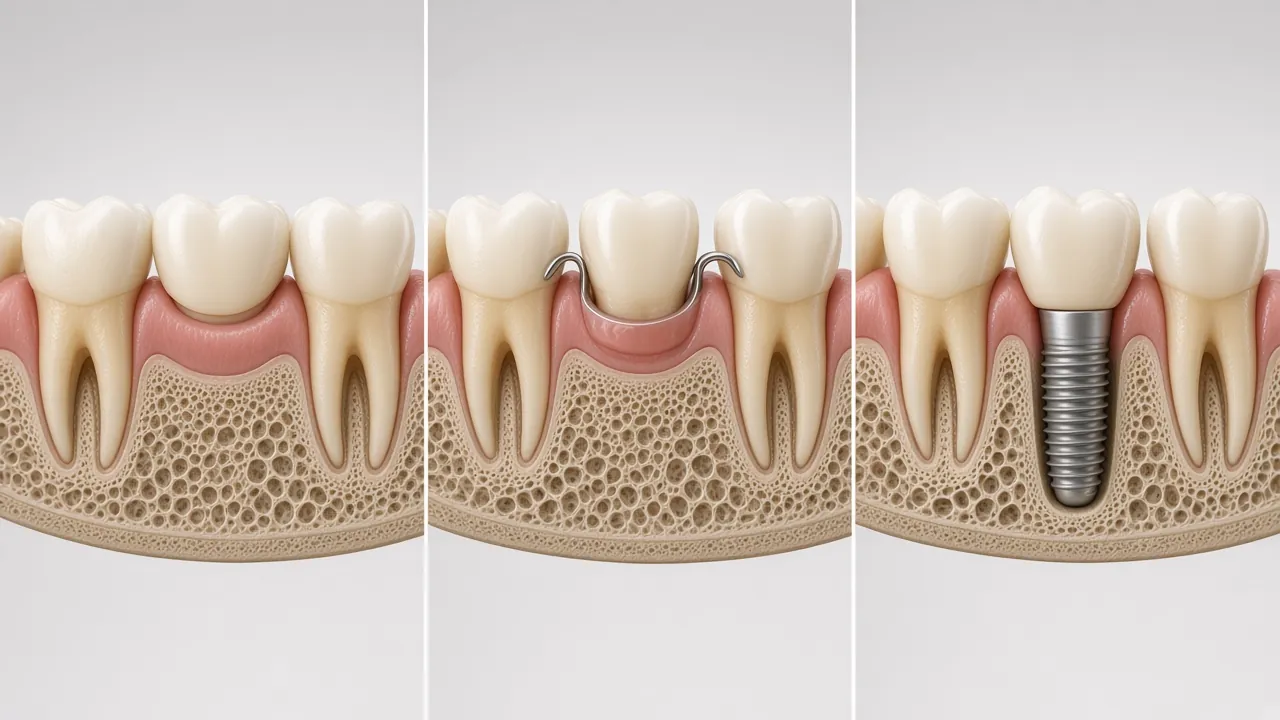
Other options
Bridge
A fixed false tooth held by crowns on the teeth either side. Usually no surgery, but those teeth are shaped for the crowns.
Denture
A removable plate with false teeth. It can replace one, some or all teeth and usually costs less upfront, but it can feel bulkier and may move.
Leaving the gap
This is an option too. Over time, nearby teeth may drift and the bone may shrink.
Cost and paying
What affects the cost
- how many implants you need
- bone grafting, a sinus lift or removing a tooth first
- 3D scans and a surgical guide
- the crown, bridge or denture on top, and its material
- the number of visits
We can’t give a price before we examine you. You’ll get a written, itemised plan and estimate before any treatment starts. Health fund rebates depend on your fund and level of cover.
Paying for dental implants
- Estimate first. For planned treatment you get a written estimate with item numbers before you start.
- Claim on the day. Bring your health fund card. We claim on the spot with Tyro, so you pay only the gap.
- Check your cover. Use the health fund checker to see which item numbers to ask your fund about.
- Ways to pay. EFTPOS and card, including tap and pay. Payment plans are available through Tyro and are tailored to each patient. Ask us about eligibility, terms and any fees before you start. Fees and payments
Any surgical or invasive procedure carries risks. Before proceeding, you should seek a second opinion from an appropriately qualified health practitioner. Suitability, treatment time and results vary from person to person.
Implant solutions for different needs
Implant + crown
Replaces one missing tooth without affecting the teeth either side.
Implant-supported bridge
A few implants can support a bridge replacing several teeth.
Implant-supported dentures
Dentures that clip or screw onto implants for far more stability than a conventional denture.
Full mouth rehabilitation
A staged plan that may combine implants, crowns, gum care and cosmetic treatment.
Bone grafting & PRF
Grafting can rebuild bone where needed; PRF from your own blood may support healing.
Who places implants
Implants are planned and placed by our dentists Dr Ramanjit Kaur (MSc Dental Implantology) and Dr William Reidy (30+ years in implant dentistry).
Common questions
Am I suitable for implants?
Many adults with good general and gum health are suitable. Bone volume, medical history, medications and smoking all matter. A consultation with 3D imaging is the only way to know.
Does it hurt?
Implant placement is usually done under local anaesthetic, so you should not feel pain during the procedure. Some tenderness and swelling afterwards is common and usually managed with simple pain relief. Experiences vary.
How long does treatment take?
From a few months to longer if grafting is needed. Healing and integration typically take weeks to months. Your dentist will give you a personalised timeline.
How do I look after implants?
Brush and floss carefully, attend regular check-ups, avoid smoking, and wear a guard if you grind your teeth or play contact sport. See our implant aftercare guide.
Talk to us about implants
Book a consultation and 3D scan to find out whether implants suit you.