Compare your options side by side
General information to help you prepare questions for your dentist. Every mouth is different; your dentist will recommend what suits you.
Choose a topic: 15 comparisons, 57 options. Use the arrow keys to move between topics.
Replacing one or more missing teeth
| Feature | Dental implant and crown | Fixed bridge | Partial denture | Full denture | Implant-retained denture | Full-arch implant bridge (All-on-4 style) |
|---|---|---|---|---|---|---|
| What it is | A titanium post placed in the jaw that fuses with the bone (osseointegration), topped with a crown. | A false tooth (pontic) held by crowns on the teeth either side of the gap. | A removable plate carrying one or more false teeth, clipping onto your natural teeth. | A removable set of teeth replacing all teeth in an upper or lower jaw. | A denture that clips onto two or more implants for extra stability. | A fixed bridge of teeth held by four or more implants in one jaw. |
| Often considered for | Replacing one or more teeth without relying on neighbouring teeth | A gap with neighbouring teeth that already need crowns | Several missing teeth, or when surgery isn’t preferred | Replacing all teeth in a jaw | People whose dentures move or who want more security | Replacing a full arch with fixed teeth |
| Visits | Several, over a few months | Usually 2 to 3 | Usually 3 to 5 | Usually 4 to 6 | Several, over a few months | Several, over a few months |
| Typical time | Often 3 to 6 months from placement to crown | About 2 to 4 weeks | A few weeks | A few weeks | Often 3 to 6 months | Often a temporary bridge first, then a final bridge months later |
| How long it lasts | Can last many years with good care | Often 10 years or more | Often 5 to 10 years; relines may be needed | Often 5 to 10 years; relines as gums change | Implants can last many years; clips need periodic replacement | Can last many years with care and maintenance |
| Comfort and recovery | Minor surgery under local anaesthetic; tenderness for a few days | Neighbouring teeth are shaped; some sensitivity is common | No surgery; a settling-in period while you get used to it | No surgery for the denture itself; adjustment visits are common | Minor surgery; tenderness for a few days | Surgery under local anaesthetic; a softer diet for a while |
| Care | Brush, floss and clean around it; regular check-ups | Clean under the bridge with floss threaders or interdental brushes | Remove and clean daily; take out at night unless told otherwise | Remove and clean daily; soak as advised | Unclip and clean daily; clean around the implants | Special brushes and regular professional maintenance |
| Cost band | higher cost band (higher) | moderate cost band (moderate) | lower cost band (lower) | moderate cost band (moderate) | higher cost band (higher) | higher cost band (higher) |
| Health fund note | Often listed under major dental on extras policies. Check your policy and waiting periods. | Often listed under major dental on extras policies. Check your policy and waiting periods. | Often listed under major dental on extras policies. Check your policy and waiting periods. | Often listed under major dental on extras policies. Check your policy and waiting periods. | Often listed under major dental on extras policies. Check your policy and waiting periods. | Often listed under major dental on extras policies. Check your policy and waiting periods. |
| Treatment page | Learn more: Dental implant and crown | Learn more: Fixed bridge | Learn more: Partial denture | Learn more: Full denture | Learn more: Implant-retained denture | Learn more: Full-arch implant bridge (All-on-4 style) |
Dental implant and crown
- What it is
- A titanium post placed in the jaw that fuses with the bone (osseointegration), topped with a crown.
- Often considered for
- Replacing one or more teeth without relying on neighbouring teeth
- Visits
- Several, over a few months
- Typical time
- Often 3 to 6 months from placement to crown
- How long it lasts
- Can last many years with good care
- Comfort and recovery
- Minor surgery under local anaesthetic; tenderness for a few days
- Care
- Brush, floss and clean around it; regular check-ups
- Cost band
- higher cost band (higher)
- Health fund note
- Often listed under major dental on extras policies. Check your policy and waiting periods.
Fixed bridge
- What it is
- A false tooth (pontic) held by crowns on the teeth either side of the gap.
- Often considered for
- A gap with neighbouring teeth that already need crowns
- Visits
- Usually 2 to 3
- Typical time
- About 2 to 4 weeks
- How long it lasts
- Often 10 years or more
- Comfort and recovery
- Neighbouring teeth are shaped; some sensitivity is common
- Care
- Clean under the bridge with floss threaders or interdental brushes
- Cost band
- moderate cost band (moderate)
- Health fund note
- Often listed under major dental on extras policies. Check your policy and waiting periods.
Partial denture
- What it is
- A removable plate carrying one or more false teeth, clipping onto your natural teeth.
- Often considered for
- Several missing teeth, or when surgery isn’t preferred
- Visits
- Usually 3 to 5
- Typical time
- A few weeks
- How long it lasts
- Often 5 to 10 years; relines may be needed
- Comfort and recovery
- No surgery; a settling-in period while you get used to it
- Care
- Remove and clean daily; take out at night unless told otherwise
- Cost band
- lower cost band (lower)
- Health fund note
- Often listed under major dental on extras policies. Check your policy and waiting periods.
Full denture
- What it is
- A removable set of teeth replacing all teeth in an upper or lower jaw.
- Often considered for
- Replacing all teeth in a jaw
- Visits
- Usually 4 to 6
- Typical time
- A few weeks
- How long it lasts
- Often 5 to 10 years; relines as gums change
- Comfort and recovery
- No surgery for the denture itself; adjustment visits are common
- Care
- Remove and clean daily; soak as advised
- Cost band
- moderate cost band (moderate)
- Health fund note
- Often listed under major dental on extras policies. Check your policy and waiting periods.
Implant-retained denture
- What it is
- A denture that clips onto two or more implants for extra stability.
- Often considered for
- People whose dentures move or who want more security
- Visits
- Several, over a few months
- Typical time
- Often 3 to 6 months
- How long it lasts
- Implants can last many years; clips need periodic replacement
- Comfort and recovery
- Minor surgery; tenderness for a few days
- Care
- Unclip and clean daily; clean around the implants
- Cost band
- higher cost band (higher)
- Health fund note
- Often listed under major dental on extras policies. Check your policy and waiting periods.
Full-arch implant bridge (All-on-4 style)
- What it is
- A fixed bridge of teeth held by four or more implants in one jaw.
- Often considered for
- Replacing a full arch with fixed teeth
- Visits
- Several, over a few months
- Typical time
- Often a temporary bridge first, then a final bridge months later
- How long it lasts
- Can last many years with care and maintenance
- Comfort and recovery
- Surgery under local anaesthetic; a softer diet for a while
- Care
- Special brushes and regular professional maintenance
- Cost band
- higher cost band (higher)
- Health fund note
- Often listed under major dental on extras policies. Check your policy and waiting periods.
Individual results vary; your dentist will advise. Timeframes and longevity are typical ranges only. Cost bands compare options within this table and are not prices or quotes.
Which suits me? A quick question or two
Repairing a chipped, cracked or decayed tooth
| Feature | Composite filling | inlay or onlay | Same-day CEREC crown | Lab-made crown |
|---|---|---|---|---|
| What it is | Tooth-coloured resin bonded into the tooth. | A custom ceramic piece bonded into or onto the tooth, covering more than a filling. | A ceramic crown designed and milled in the practice while you wait. | A crown made by a dental laboratory from impressions or scans; a temporary crown is worn in between. |
| Often considered for | Small to medium cavities and chips | Larger damage where a filling may not be strong enough | A tooth needing a crown, when one visit suits you | A tooth needing a crown, including some complex or highly aesthetic cases |
| Visits | Usually 1 | 1 to 2 | Usually 1 | Usually 2 |
| Typical time | Often 30 to 60 minutes | One visit with CEREC, or about 2 weeks via a lab | Often 2 to 3 hours | About 2 to 3 weeks |
| How long it lasts | Often 5 to 10 years | Often 10 years or more | Often 10 years or more | Often 10 years or more |
| Comfort and recovery | Numbing if needed; sensitivity can settle over days | Similar to a filling; mild sensitivity is common | Numbing; mild tenderness for a few days | Numbing; a temporary crown for a short time |
| Care | Brush, floss, limit sugar | As for natural teeth; regular check-ups | Brush and floss; a night guard if you grind | Brush and floss; care with the temporary crown |
| Cost band | lower cost band (lower) | moderate cost band (moderate) | higher cost band (higher) | higher cost band (higher) |
| Health fund note | Usually general dental on extras policies. Check your policy. | Often listed under major dental on extras policies. Check your policy and waiting periods. | Often listed under major dental on extras policies. Check your policy and waiting periods. | Often listed under major dental on extras policies. Check your policy and waiting periods. |
| Treatment page | Learn more: Composite filling | Learn more: inlay or onlay | Learn more: Same-day CEREC crown | Learn more: Lab-made crown |
Composite filling
- What it is
- Tooth-coloured resin bonded into the tooth.
- Often considered for
- Small to medium cavities and chips
- Visits
- Usually 1
- Typical time
- Often 30 to 60 minutes
- How long it lasts
- Often 5 to 10 years
- Comfort and recovery
- Numbing if needed; sensitivity can settle over days
- Care
- Brush, floss, limit sugar
- Cost band
- lower cost band (lower)
- Health fund note
- Usually general dental on extras policies. Check your policy.
inlay or onlay
- What it is
- A custom ceramic piece bonded into or onto the tooth, covering more than a filling.
- Often considered for
- Larger damage where a filling may not be strong enough
- Visits
- 1 to 2
- Typical time
- One visit with CEREC, or about 2 weeks via a lab
- How long it lasts
- Often 10 years or more
- Comfort and recovery
- Similar to a filling; mild sensitivity is common
- Care
- As for natural teeth; regular check-ups
- Cost band
- moderate cost band (moderate)
- Health fund note
- Often listed under major dental on extras policies. Check your policy and waiting periods.
Same-day CEREC crown
- What it is
- A ceramic crown designed and milled in the practice while you wait.
- Often considered for
- A tooth needing a crown, when one visit suits you
- Visits
- Usually 1
- Typical time
- Often 2 to 3 hours
- How long it lasts
- Often 10 years or more
- Comfort and recovery
- Numbing; mild tenderness for a few days
- Care
- Brush and floss; a night guard if you grind
- Cost band
- higher cost band (higher)
- Health fund note
- Often listed under major dental on extras policies. Check your policy and waiting periods.
Lab-made crown
- What it is
- A crown made by a dental laboratory from impressions or scans; a temporary crown is worn in between.
- Often considered for
- A tooth needing a crown, including some complex or highly aesthetic cases
- Visits
- Usually 2
- Typical time
- About 2 to 3 weeks
- How long it lasts
- Often 10 years or more
- Comfort and recovery
- Numbing; a temporary crown for a short time
- Care
- Brush and floss; care with the temporary crown
- Cost band
- higher cost band (higher)
- Health fund note
- Often listed under major dental on extras policies. Check your policy and waiting periods.
Individual results vary; your dentist will advise. Timeframes and longevity are typical ranges only. Cost bands compare options within this table and are not prices or quotes.
Which suits me? A quick question or two
Changing the colour or shape of your front teeth
| Feature | In-chair whitening (Zoom) | Take-home whitening trays Ask if available | Composite bonding | Porcelain veneers | Composite veneers |
|---|---|---|---|---|---|
| What it is | A whitening gel applied and activated with a light in the chair. | Custom trays you wear at home with a whitening gel. | Tooth-coloured resin shaped onto the tooth to change its shape or close small gaps. | Thin porcelain shells bonded to the front of the teeth. | Resin built up over the front of the teeth in the chair. |
| Often considered for | Natural teeth with general staining | Gradual whitening at your own pace | Small chips, gaps or shape changes | Shape, colour and minor alignment concerns, after a full assessment | Shape and colour changes with little or no tooth removal |
| Visits | Usually 1 (after a check-up) | Usually 2 | Usually 1 | Usually 2 to 3 | Usually 1 to 2 |
| Typical time | About 1 to 2 hours | About 2 weeks of daily use | About 30 to 60 minutes per tooth | About 2 to 3 weeks | Several hours |
| How long it lasts | Varies; tea, coffee, red wine and smoking shorten it | Varies; touch-ups can help | Often 5 to 7 years; can chip or stain | Often 10 years or more | Often 5 to 7 years; may need polishing or repair |
| Comfort and recovery | Temporary sensitivity is common | Temporary sensitivity is common | Usually no numbing needed | Some enamel is removed; temporary sensitivity | Usually little or no numbing |
| Care | Avoid strongly coloured food and drink for a day or two | Follow the instructions for wear time | Avoid biting hard objects; polish at check-ups | A night guard if you grind; regular check-ups | Avoid biting hard objects; polish at check-ups |
| Cost band | moderate cost band (moderate) | lower cost band (lower) | moderate cost band (moderate) | higher cost band (higher) | moderate cost band (moderate) |
| Health fund note | Cosmetic treatments are often not covered. Check your policy. | Cosmetic treatments are often not covered. Check your policy. | Cosmetic treatments are often not covered. Check your policy. | Cosmetic treatments are often not covered. Check your policy. | Cosmetic treatments are often not covered. Check your policy. |
| Treatment page | Learn more: In-chair whitening (Zoom) | Related page: Take-home whitening trays | Learn more: Composite bonding | Learn more: Porcelain veneers | Learn more: Composite veneers |
In-chair whitening (Zoom)
- What it is
- A whitening gel applied and activated with a light in the chair.
- Often considered for
- Natural teeth with general staining
- Visits
- Usually 1 (after a check-up)
- Typical time
- About 1 to 2 hours
- How long it lasts
- Varies; tea, coffee, red wine and smoking shorten it
- Comfort and recovery
- Temporary sensitivity is common
- Care
- Avoid strongly coloured food and drink for a day or two
- Cost band
- moderate cost band (moderate)
- Health fund note
- Cosmetic treatments are often not covered. Check your policy.
Take-home whitening trays Ask if available
- What it is
- Custom trays you wear at home with a whitening gel.
- Often considered for
- Gradual whitening at your own pace
- Visits
- Usually 2
- Typical time
- About 2 weeks of daily use
- How long it lasts
- Varies; touch-ups can help
- Comfort and recovery
- Temporary sensitivity is common
- Care
- Follow the instructions for wear time
- Cost band
- lower cost band (lower)
- Health fund note
- Cosmetic treatments are often not covered. Check your policy.
Composite bonding
- What it is
- Tooth-coloured resin shaped onto the tooth to change its shape or close small gaps.
- Often considered for
- Small chips, gaps or shape changes
- Visits
- Usually 1
- Typical time
- About 30 to 60 minutes per tooth
- How long it lasts
- Often 5 to 7 years; can chip or stain
- Comfort and recovery
- Usually no numbing needed
- Care
- Avoid biting hard objects; polish at check-ups
- Cost band
- moderate cost band (moderate)
- Health fund note
- Cosmetic treatments are often not covered. Check your policy.
Porcelain veneers
- What it is
- Thin porcelain shells bonded to the front of the teeth.
- Often considered for
- Shape, colour and minor alignment concerns, after a full assessment
- Visits
- Usually 2 to 3
- Typical time
- About 2 to 3 weeks
- How long it lasts
- Often 10 years or more
- Comfort and recovery
- Some enamel is removed; temporary sensitivity
- Care
- A night guard if you grind; regular check-ups
- Cost band
- higher cost band (higher)
- Health fund note
- Cosmetic treatments are often not covered. Check your policy.
Composite veneers
- What it is
- Resin built up over the front of the teeth in the chair.
- Often considered for
- Shape and colour changes with little or no tooth removal
- Visits
- Usually 1 to 2
- Typical time
- Several hours
- How long it lasts
- Often 5 to 7 years; may need polishing or repair
- Comfort and recovery
- Usually little or no numbing
- Care
- Avoid biting hard objects; polish at check-ups
- Cost band
- moderate cost band (moderate)
- Health fund note
- Cosmetic treatments are often not covered. Check your policy.
Individual results vary; your dentist will advise. Timeframes and longevity are typical ranges only. Cost bands compare options within this table and are not prices or quotes.
Which suits me? A quick question or two
Straightening teeth and keeping them straight
| Feature | Invisalign clear aligners | Fixed braces Ask if available | Retainers |
|---|---|---|---|
| What it is | A series of removable clear trays that move teeth gradually. | Brackets and wires bonded to the teeth. | Removable or bonded appliances that hold teeth in their new position. |
| Often considered for | Many crowding and spacing concerns, assessed case by case | Complex movements, often through an orthodontist | After any straightening treatment |
| Visits | Check-ins every 6 to 10 weeks | Regular adjustments | 1 to 2 |
| Typical time | From several months to around 18 months or more | Often 18 to 24 months | Ongoing |
| How long it lasts | Results need retainers to stay | Results need retainers to stay | Removable retainers need periodic replacement |
| Comfort and recovery | Pressure for a day or two with each new tray | Soreness after adjustments | Usually comfortable |
| Care | Wear about 22 hours a day; clean trays | Extra cleaning around brackets; avoid hard or sticky food | Wear as instructed; clean daily |
| Cost band | higher cost band (higher) | higher cost band (higher) | lower cost band (lower) |
| Health fund note | Orthodontic cover, if your policy has it, often has a lifetime limit. Check your policy. | Orthodontic cover, if your policy has it, often has a lifetime limit. Check your policy. | Orthodontic cover, if your policy has it, often has a lifetime limit. Check your policy. |
| Treatment page | Learn more: Invisalign clear aligners | Related page: Fixed braces | Learn more: Retainers |
Invisalign clear aligners
- What it is
- A series of removable clear trays that move teeth gradually.
- Often considered for
- Many crowding and spacing concerns, assessed case by case
- Visits
- Check-ins every 6 to 10 weeks
- Typical time
- From several months to around 18 months or more
- How long it lasts
- Results need retainers to stay
- Comfort and recovery
- Pressure for a day or two with each new tray
- Care
- Wear about 22 hours a day; clean trays
- Cost band
- higher cost band (higher)
- Health fund note
- Orthodontic cover, if your policy has it, often has a lifetime limit. Check your policy.
Fixed braces Ask if available
- What it is
- Brackets and wires bonded to the teeth.
- Often considered for
- Complex movements, often through an orthodontist
- Visits
- Regular adjustments
- Typical time
- Often 18 to 24 months
- How long it lasts
- Results need retainers to stay
- Comfort and recovery
- Soreness after adjustments
- Care
- Extra cleaning around brackets; avoid hard or sticky food
- Cost band
- higher cost band (higher)
- Health fund note
- Orthodontic cover, if your policy has it, often has a lifetime limit. Check your policy.
Retainers
- What it is
- Removable or bonded appliances that hold teeth in their new position.
- Often considered for
- After any straightening treatment
- Visits
- 1 to 2
- Typical time
- Ongoing
- How long it lasts
- Removable retainers need periodic replacement
- Comfort and recovery
- Usually comfortable
- Care
- Wear as instructed; clean daily
- Cost band
- lower cost band (lower)
- Health fund note
- Orthodontic cover, if your policy has it, often has a lifetime limit. Check your policy.
Individual results vary; your dentist will advise. Timeframes and longevity are typical ranges only. Cost bands compare options within this table and are not prices or quotes.
Which suits me? A quick question or two
Saving or removing an infected tooth
| Feature | Root canal treatment and crown | Extraction | Extraction, then an implant | Extraction, then a bridge or denture |
|---|---|---|---|---|
| What it is | Cleaning and sealing the inside of the tooth, usually followed by a crown to protect it. | Removing the tooth. | Removing the tooth and replacing it later with an implant and crown. | Removing the tooth and replacing it with a bridge or a removable denture. |
| Often considered for | Keeping your natural tooth when it can be saved | A tooth that can’t be saved or when keeping it isn’t preferred | Replacing the tooth with a fixed option | Replacing the tooth without surgery for an implant |
| Visits | Usually 2 to 3, plus crown visits | Usually 1 | Several, over months | Several |
| Typical time | Several weeks including the crown | About 20 to 60 minutes | Often 3 to 6 months or more | A few weeks to months |
| How long it lasts | A treated, crowned tooth can last many years | Can’t be reversed; the gap may need replacing | Can last many years | Bridge often 10 years or more; dentures 5 to 10 |
| Comfort and recovery | Numbing; tenderness for a few days is common | Numbing; healing over 1 to 2 weeks | Two procedures; healing between | Healing after the extraction |
| Care | Brush and floss; get the crown placed as advised | Follow extraction aftercare to lower the risk of dry socket | As for implants | As for bridges or dentures |
| Cost band | higher cost band (higher) | lower cost band (lower) | higher cost band (higher) | moderate cost band (moderate) |
| Health fund note | Root canal is often listed under endodontic or major dental. Check your policy. | Usually general dental on extras policies. Check your policy. | Often listed under major dental on extras policies. Check your policy and waiting periods. | Often listed under major dental on extras policies. Check your policy and waiting periods. |
| Treatment page | Learn more: Root canal treatment and crown | Learn more: Extraction | Learn more: Extraction, then an implant | Learn more: Extraction, then a bridge or denture |
Root canal treatment and crown
- What it is
- Cleaning and sealing the inside of the tooth, usually followed by a crown to protect it.
- Often considered for
- Keeping your natural tooth when it can be saved
- Visits
- Usually 2 to 3, plus crown visits
- Typical time
- Several weeks including the crown
- How long it lasts
- A treated, crowned tooth can last many years
- Comfort and recovery
- Numbing; tenderness for a few days is common
- Care
- Brush and floss; get the crown placed as advised
- Cost band
- higher cost band (higher)
- Health fund note
- Root canal is often listed under endodontic or major dental. Check your policy.
Extraction
- What it is
- Removing the tooth.
- Often considered for
- A tooth that can’t be saved or when keeping it isn’t preferred
- Visits
- Usually 1
- Typical time
- About 20 to 60 minutes
- How long it lasts
- Can’t be reversed; the gap may need replacing
- Comfort and recovery
- Numbing; healing over 1 to 2 weeks
- Care
- Follow extraction aftercare to lower the risk of dry socket
- Cost band
- lower cost band (lower)
- Health fund note
- Usually general dental on extras policies. Check your policy.
Extraction, then an implant
- What it is
- Removing the tooth and replacing it later with an implant and crown.
- Often considered for
- Replacing the tooth with a fixed option
- Visits
- Several, over months
- Typical time
- Often 3 to 6 months or more
- How long it lasts
- Can last many years
- Comfort and recovery
- Two procedures; healing between
- Care
- As for implants
- Cost band
- higher cost band (higher)
- Health fund note
- Often listed under major dental on extras policies. Check your policy and waiting periods.
Extraction, then a bridge or denture
- What it is
- Removing the tooth and replacing it with a bridge or a removable denture.
- Often considered for
- Replacing the tooth without surgery for an implant
- Visits
- Several
- Typical time
- A few weeks to months
- How long it lasts
- Bridge often 10 years or more; dentures 5 to 10
- Comfort and recovery
- Healing after the extraction
- Care
- As for bridges or dentures
- Cost band
- moderate cost band (moderate)
- Health fund note
- Often listed under major dental on extras policies. Check your policy and waiting periods.
Individual results vary; your dentist will advise. Timeframes and longevity are typical ranges only. Cost bands compare options within this table and are not prices or quotes.
Which suits me? A quick question or two
Treating gum inflammation and gum disease
| Feature | Scale and clean | Deep periodontal cleaning Ask if available | Laser gum therapy (LightWalker) | Crown lengthening |
|---|---|---|---|---|
| What it is | Removing plaque and tartar above and just below the gum line. | Cleaning deeper pockets around the roots under numbing. | A dental laser used to support gum disease treatment. | Reshaping gum (and sometimes bone) to expose more tooth. |
| Often considered for | Healthy gums or mild gingivitis | Gum disease with deeper pockets | Supporting treatment of gum pockets, assessed case by case | Before a crown when not enough tooth shows, or a gummy smile |
| Visits | Usually 1 (every 6 to 12 months) | Often 2 to 4, plus a review | Often 2 or more | 1 to 2, plus review |
| Typical time | About 30 to 60 minutes | Several weeks including review | Varies | Healing over several weeks |
| How long it lasts | Tartar builds again, so regular cleans help | Ongoing maintenance needed | Ongoing maintenance needed | Long-lasting |
| Comfort and recovery | Usually comfortable; numbing if sensitive | Numbing; tenderness for a few days | Comfort varies; your dentist will explain what to expect | Minor procedure; tenderness for several days |
| Care | Brush twice daily and clean between teeth | Careful home care and regular maintenance visits | Careful home care and regular maintenance visits | Gentle cleaning while healing |
| Cost band | lower cost band (lower) | moderate cost band (moderate) | moderate cost band (moderate) | moderate cost band (moderate) |
| Health fund note | Usually general dental on extras policies. Check your policy. | Usually general dental on extras policies. Check your policy. | Usually general dental on extras policies. Check your policy. | Often listed under major dental on extras policies. Check your policy and waiting periods. |
| Treatment page | Learn more: Scale and clean | Related page: Deep periodontal cleaning | Learn more: Laser gum therapy (LightWalker) | Learn more: Crown lengthening |
Scale and clean
- What it is
- Removing plaque and tartar above and just below the gum line.
- Often considered for
- Healthy gums or mild gingivitis
- Visits
- Usually 1 (every 6 to 12 months)
- Typical time
- About 30 to 60 minutes
- How long it lasts
- Tartar builds again, so regular cleans help
- Comfort and recovery
- Usually comfortable; numbing if sensitive
- Care
- Brush twice daily and clean between teeth
- Cost band
- lower cost band (lower)
- Health fund note
- Usually general dental on extras policies. Check your policy.
Deep periodontal cleaning Ask if available
- What it is
- Cleaning deeper pockets around the roots under numbing.
- Often considered for
- Gum disease with deeper pockets
- Visits
- Often 2 to 4, plus a review
- Typical time
- Several weeks including review
- How long it lasts
- Ongoing maintenance needed
- Comfort and recovery
- Numbing; tenderness for a few days
- Care
- Careful home care and regular maintenance visits
- Cost band
- moderate cost band (moderate)
- Health fund note
- Usually general dental on extras policies. Check your policy.
Laser gum therapy (LightWalker)
- What it is
- A dental laser used to support gum disease treatment.
- Often considered for
- Supporting treatment of gum pockets, assessed case by case
- Visits
- Often 2 or more
- Typical time
- Varies
- How long it lasts
- Ongoing maintenance needed
- Comfort and recovery
- Comfort varies; your dentist will explain what to expect
- Care
- Careful home care and regular maintenance visits
- Cost band
- moderate cost band (moderate)
- Health fund note
- Usually general dental on extras policies. Check your policy.
Crown lengthening
- What it is
- Reshaping gum (and sometimes bone) to expose more tooth.
- Often considered for
- Before a crown when not enough tooth shows, or a gummy smile
- Visits
- 1 to 2, plus review
- Typical time
- Healing over several weeks
- How long it lasts
- Long-lasting
- Comfort and recovery
- Minor procedure; tenderness for several days
- Care
- Gentle cleaning while healing
- Cost band
- moderate cost band (moderate)
- Health fund note
- Often listed under major dental on extras policies. Check your policy and waiting periods.
Individual results vary; your dentist will advise. Timeframes and longevity are typical ranges only. Cost bands compare options within this table and are not prices or quotes.
Which suits me? A quick question or two
Ways to whiten teeth
| Feature | In-chair Zoom whitening | Take-home trays Ask if available | In-chair plus take-home top-ups Ask if available | Veneers or bonding instead |
|---|---|---|---|---|
| What it is | Gel applied and light-activated in the chair under supervision. | Custom trays with whitening gel used at home. | An in-chair session followed by trays for touch-ups. | Covering the tooth surface when whitening isn’t expected to help (for example some internal staining or fillings). |
| Often considered for | A noticeable change in one visit, after a check-up | Gradual change at your own pace | Keeping the result over time | Staining that doesn’t respond to whitening; fillings and crowns don’t whiten |
| Visits | Usually 1 | Usually 2 | 2 to 3 | 1 to 3 |
| Typical time | About 1 to 2 hours | About 2 weeks | A few weeks | 1 day to a few weeks |
| How long it lasts | Varies with diet and habits | Varies; touch-ups help | Varies | 5 to 10+ years depending on material |
| Comfort and recovery | Temporary sensitivity is common | Temporary sensitivity is common | Temporary sensitivity is common | See veneers and bonding |
| Care | Avoid strongly coloured food and drink for a day or two | Follow instructions | Follow instructions | See veneers and bonding |
| Cost band | moderate cost band (moderate) | lower cost band (lower) | moderate cost band (moderate) | higher cost band (higher) |
| Health fund note | Cosmetic treatments are often not covered. Check your policy. | Cosmetic treatments are often not covered. Check your policy. | Cosmetic treatments are often not covered. Check your policy. | Cosmetic treatments are often not covered. Check your policy. |
| Treatment page | Learn more: In-chair Zoom whitening | Related page: Take-home trays | Related page: In-chair plus take-home top-ups | Learn more: Veneers or bonding instead |
In-chair Zoom whitening
- What it is
- Gel applied and light-activated in the chair under supervision.
- Often considered for
- A noticeable change in one visit, after a check-up
- Visits
- Usually 1
- Typical time
- About 1 to 2 hours
- How long it lasts
- Varies with diet and habits
- Comfort and recovery
- Temporary sensitivity is common
- Care
- Avoid strongly coloured food and drink for a day or two
- Cost band
- moderate cost band (moderate)
- Health fund note
- Cosmetic treatments are often not covered. Check your policy.
Take-home trays Ask if available
- What it is
- Custom trays with whitening gel used at home.
- Often considered for
- Gradual change at your own pace
- Visits
- Usually 2
- Typical time
- About 2 weeks
- How long it lasts
- Varies; touch-ups help
- Comfort and recovery
- Temporary sensitivity is common
- Care
- Follow instructions
- Cost band
- lower cost band (lower)
- Health fund note
- Cosmetic treatments are often not covered. Check your policy.
In-chair plus take-home top-ups Ask if available
- What it is
- An in-chair session followed by trays for touch-ups.
- Often considered for
- Keeping the result over time
- Visits
- 2 to 3
- Typical time
- A few weeks
- How long it lasts
- Varies
- Comfort and recovery
- Temporary sensitivity is common
- Care
- Follow instructions
- Cost band
- moderate cost band (moderate)
- Health fund note
- Cosmetic treatments are often not covered. Check your policy.
Veneers or bonding instead
- What it is
- Covering the tooth surface when whitening isn’t expected to help (for example some internal staining or fillings).
- Often considered for
- Staining that doesn’t respond to whitening; fillings and crowns don’t whiten
- Visits
- 1 to 3
- Typical time
- 1 day to a few weeks
- How long it lasts
- 5 to 10+ years depending on material
- Comfort and recovery
- See veneers and bonding
- Care
- See veneers and bonding
- Cost band
- higher cost band (higher)
- Health fund note
- Cosmetic treatments are often not covered. Check your policy.
Individual results vary; your dentist will advise. Timeframes and longevity are typical ranges only. Cost bands compare options within this table and are not prices or quotes.
Which suits me? A quick question or two
Protecting teeth from grinding and impact
| Feature | Night guard (occlusal splint) | Sports mouthguard Ask if available | Bite adjustment Ask if available |
|---|---|---|---|
| What it is | A custom hard or soft guard worn while you sleep. | A custom-fitted guard for contact sport. | Small adjustments to the biting surfaces after an assessment. |
| Often considered for | Grinding or clenching at night, and some jaw discomfort | Protecting teeth during sport | Specific bite problems identified by your dentist |
| Visits | Usually 2 | Usually 2 | 1 to 2 |
| Typical time | About 1 to 2 weeks | About 1 to 2 weeks | Short visits |
| How long it lasts | Often several years; replace if worn or cracked | Replace as you grow or if damaged | Varies |
| Comfort and recovery | Takes a few nights to get used to | Comfortable fit; easier to talk and breathe than store-bought | Usually no numbing |
| Care | Rinse and brush the guard; store dry in its case | Rinse after use; keep in a vented case | Review as advised |
| Cost band | moderate cost band (moderate) | lower cost band (lower) | lower cost band (lower) |
| Health fund note | Usually general dental on extras policies. Check your policy. | Usually general dental on extras policies. Check your policy. | Usually general dental on extras policies. Check your policy. |
| Treatment page | Learn more: Night guard (occlusal splint) | Related page: Sports mouthguard | Related page: Bite adjustment |
Night guard (occlusal splint)
- What it is
- A custom hard or soft guard worn while you sleep.
- Often considered for
- Grinding or clenching at night, and some jaw discomfort
- Visits
- Usually 2
- Typical time
- About 1 to 2 weeks
- How long it lasts
- Often several years; replace if worn or cracked
- Comfort and recovery
- Takes a few nights to get used to
- Care
- Rinse and brush the guard; store dry in its case
- Cost band
- moderate cost band (moderate)
- Health fund note
- Usually general dental on extras policies. Check your policy.
Sports mouthguard Ask if available
- What it is
- A custom-fitted guard for contact sport.
- Often considered for
- Protecting teeth during sport
- Visits
- Usually 2
- Typical time
- About 1 to 2 weeks
- How long it lasts
- Replace as you grow or if damaged
- Comfort and recovery
- Comfortable fit; easier to talk and breathe than store-bought
- Care
- Rinse after use; keep in a vented case
- Cost band
- lower cost band (lower)
- Health fund note
- Usually general dental on extras policies. Check your policy.
Bite adjustment Ask if available
- What it is
- Small adjustments to the biting surfaces after an assessment.
- Often considered for
- Specific bite problems identified by your dentist
- Visits
- 1 to 2
- Typical time
- Short visits
- How long it lasts
- Varies
- Comfort and recovery
- Usually no numbing
- Care
- Review as advised
- Cost band
- lower cost band (lower)
- Health fund note
- Usually general dental on extras policies. Check your policy.
Individual results vary; your dentist will advise. Timeframes and longevity are typical ranges only. Cost bands compare options within this table and are not prices or quotes.
Which suits me? A quick question or two
Common crown materials
| Feature | Zirconia Ask if available | Lithium disilicate (e.max) Ask if available | Porcelain fused to metal (PFM) | Gold or metal alloy Ask if available |
|---|---|---|---|---|
| What it is | A very strong ceramic. | A strong, natural-looking glass ceramic, often used for same-day CEREC crowns. | Porcelain over a metal base. | A metal crown, very durable. |
| Often considered for | Back teeth and heavy bite forces | Front and back teeth where appearance matters | Strength with a tooth-coloured surface | Back teeth with heavy wear where appearance matters less |
| Visits | 1 to 2 | 1 to 2 | Usually 2 | Usually 2 |
| Typical time | Same day to 3 weeks | Same day to 3 weeks | About 2 to 3 weeks | About 2 to 3 weeks |
| How long it lasts | Often 10 years or more | Often 10 years or more | Often 10 years or more; a dark line can show at the gum | Often many years |
| Comfort and recovery | As for any crown | As for any crown | As for any crown | Less tooth removal than some options |
| Care | Brush and floss; night guard if you grind | Brush and floss; night guard if you grind | Brush and floss | Brush and floss |
| Cost band | higher cost band (higher) | higher cost band (higher) | moderate cost band (moderate) | higher cost band (higher) |
| Health fund note | Often listed under major dental on extras policies. Check your policy and waiting periods. | Often listed under major dental on extras policies. Check your policy and waiting periods. | Often listed under major dental on extras policies. Check your policy and waiting periods. | Often listed under major dental on extras policies. Check your policy and waiting periods. |
| Treatment page | Related page: Zirconia | Related page: Lithium disilicate (e.max) | Learn more: Porcelain fused to metal (PFM) | Related page: Gold or metal alloy |
Zirconia Ask if available
- What it is
- A very strong ceramic.
- Often considered for
- Back teeth and heavy bite forces
- Visits
- 1 to 2
- Typical time
- Same day to 3 weeks
- How long it lasts
- Often 10 years or more
- Comfort and recovery
- As for any crown
- Care
- Brush and floss; night guard if you grind
- Cost band
- higher cost band (higher)
- Health fund note
- Often listed under major dental on extras policies. Check your policy and waiting periods.
Lithium disilicate (e.max) Ask if available
- What it is
- A strong, natural-looking glass ceramic, often used for same-day CEREC crowns.
- Often considered for
- Front and back teeth where appearance matters
- Visits
- 1 to 2
- Typical time
- Same day to 3 weeks
- How long it lasts
- Often 10 years or more
- Comfort and recovery
- As for any crown
- Care
- Brush and floss; night guard if you grind
- Cost band
- higher cost band (higher)
- Health fund note
- Often listed under major dental on extras policies. Check your policy and waiting periods.
Porcelain fused to metal (PFM)
- What it is
- Porcelain over a metal base.
- Often considered for
- Strength with a tooth-coloured surface
- Visits
- Usually 2
- Typical time
- About 2 to 3 weeks
- How long it lasts
- Often 10 years or more; a dark line can show at the gum
- Comfort and recovery
- As for any crown
- Care
- Brush and floss
- Cost band
- moderate cost band (moderate)
- Health fund note
- Often listed under major dental on extras policies. Check your policy and waiting periods.
Gold or metal alloy Ask if available
- What it is
- A metal crown, very durable.
- Often considered for
- Back teeth with heavy wear where appearance matters less
- Visits
- Usually 2
- Typical time
- About 2 to 3 weeks
- How long it lasts
- Often many years
- Comfort and recovery
- Less tooth removal than some options
- Care
- Brush and floss
- Cost band
- higher cost band (higher)
- Health fund note
- Often listed under major dental on extras policies. Check your policy and waiting periods.
Individual results vary; your dentist will advise. Timeframes and longevity are typical ranges only. Cost bands compare options within this table and are not prices or quotes.
Which suits me? A quick question or two
Common filling materials
| Feature | Composite resin | Glass ionomer (GIC) | Ceramic / porcelain (inlay) | Amalgam (silver) Ask if available |
|---|---|---|---|---|
| What it is | Tooth-coloured resin bonded to the tooth. | A tooth-coloured material that releases fluoride. | A ceramic piece made to fit and bonded in place. | A metal filling material. |
| Often considered for | Small to medium cavities; front and back teeth | Children’s teeth and areas near the gum line | Larger cavities where strength and stain resistance matter | Some back-tooth fillings |
| Visits | Usually 1 | Usually 1 | 1 to 2 | Usually 1 |
| Typical time | About 30 to 60 minutes | Short | Same day with CEREC, or about 2 weeks | About 30 to 60 minutes |
| How long it lasts | Often 5 to 10 years | Less hard-wearing than composite | Often 10 years or more | Often 10 years or more |
| Comfort and recovery | Numbing if needed | Numbing if needed | Numbing | Numbing |
| Care | Brush, floss, limit sugar | Brush with fluoride toothpaste | As for natural teeth | Brush and floss |
| Cost band | lower cost band (lower) | lower cost band (lower) | moderate cost band (moderate) | lower cost band (lower) |
| Health fund note | Usually general dental on extras policies. Check your policy. | Usually general dental on extras policies. Check your policy. | Often listed under major dental on extras policies. Check your policy and waiting periods. | Usually general dental on extras policies. Check your policy. |
| Treatment page | Learn more: Composite resin | Learn more: Glass ionomer (GIC) | Learn more: Ceramic / porcelain (inlay) | Related page: Amalgam (silver) |
Composite resin
- What it is
- Tooth-coloured resin bonded to the tooth.
- Often considered for
- Small to medium cavities; front and back teeth
- Visits
- Usually 1
- Typical time
- About 30 to 60 minutes
- How long it lasts
- Often 5 to 10 years
- Comfort and recovery
- Numbing if needed
- Care
- Brush, floss, limit sugar
- Cost band
- lower cost band (lower)
- Health fund note
- Usually general dental on extras policies. Check your policy.
Glass ionomer (GIC)
- What it is
- A tooth-coloured material that releases fluoride.
- Often considered for
- Children’s teeth and areas near the gum line
- Visits
- Usually 1
- Typical time
- Short
- How long it lasts
- Less hard-wearing than composite
- Comfort and recovery
- Numbing if needed
- Care
- Brush with fluoride toothpaste
- Cost band
- lower cost band (lower)
- Health fund note
- Usually general dental on extras policies. Check your policy.
Ceramic / porcelain (inlay)
- What it is
- A ceramic piece made to fit and bonded in place.
- Often considered for
- Larger cavities where strength and stain resistance matter
- Visits
- 1 to 2
- Typical time
- Same day with CEREC, or about 2 weeks
- How long it lasts
- Often 10 years or more
- Comfort and recovery
- Numbing
- Care
- As for natural teeth
- Cost band
- moderate cost band (moderate)
- Health fund note
- Often listed under major dental on extras policies. Check your policy and waiting periods.
Amalgam (silver) Ask if available
- What it is
- A metal filling material.
- Often considered for
- Some back-tooth fillings
- Visits
- Usually 1
- Typical time
- About 30 to 60 minutes
- How long it lasts
- Often 10 years or more
- Comfort and recovery
- Numbing
- Care
- Brush and floss
- Cost band
- lower cost band (lower)
- Health fund note
- Usually general dental on extras policies. Check your policy.
Individual results vary; your dentist will advise. Timeframes and longevity are typical ranges only. Cost bands compare options within this table and are not prices or quotes.
Which suits me? A quick question or two
Protecting children’s teeth
| Feature | Fissure sealants | fluoride varnish |
|---|---|---|
| What it is | A thin protective coating painted into the grooves of back teeth. | A fluoride coating painted on the teeth to strengthen enamel. |
| Often considered for | New adult back teeth with deep grooves | Children at higher risk of decay |
| Visits | Usually 1 | At check-ups |
| Typical time | A few minutes per tooth | A few minutes |
| How long it lasts | Several years; checked at each visit | Repeated at check-ups |
| Comfort and recovery | No numbing; quick and usually comfortable | Quick and usually comfortable |
| Care | Keep brushing; checked at check-ups | Avoid eating or brushing for a short time afterwards, as advised |
| Cost band | lower cost band (lower) | lower cost band (lower) |
| Health fund note | Usually general dental on extras policies. Check your policy. | Usually general dental on extras policies. Check your policy. |
| Treatment page | Learn more: Fissure sealants | Learn more: fluoride varnish |
Fissure sealants
- What it is
- A thin protective coating painted into the grooves of back teeth.
- Often considered for
- New adult back teeth with deep grooves
- Visits
- Usually 1
- Typical time
- A few minutes per tooth
- How long it lasts
- Several years; checked at each visit
- Comfort and recovery
- No numbing; quick and usually comfortable
- Care
- Keep brushing; checked at check-ups
- Cost band
- lower cost band (lower)
- Health fund note
- Usually general dental on extras policies. Check your policy.
fluoride varnish
- What it is
- A fluoride coating painted on the teeth to strengthen enamel.
- Often considered for
- Children at higher risk of decay
- Visits
- At check-ups
- Typical time
- A few minutes
- How long it lasts
- Repeated at check-ups
- Comfort and recovery
- Quick and usually comfortable
- Care
- Avoid eating or brushing for a short time afterwards, as advised
- Cost band
- lower cost band (lower)
- Health fund note
- Usually general dental on extras policies. Check your policy.
Individual results vary; your dentist will advise. Timeframes and longevity are typical ranges only. Cost bands compare options within this table and are not prices or quotes.
Which suits me? A quick question or two
Comfort options for nervous patients
| Feature | Local anaesthetic with comfort measures | Happy gas (nitrous oxide) Ask if available | Oral sedation Ask if available | IV sedation or general anaesthetic (referral) Ask if available |
|---|---|---|---|---|
| What it is | Numbing the area, plus breaks, a hand signal and step-by-step explanations. | Gas breathed through a small nose mask to help you relax. | A prescribed medicine taken before the appointment to help you relax. | Deeper sedation or anaesthesia provided by a specialist or hospital team. |
| Often considered for | Most treatments, and most anxious patients | Mild to moderate anxiety | Moderate anxiety, assessed case by case | Severe anxiety or complex treatment |
| Visits | As needed | As needed | As needed | Referral plus treatment |
| Typical time | As for the treatment | During treatment | During treatment | As arranged |
| How long it lasts | During the treatment | Wears off within minutes | Effects can last several hours | As arranged |
| Comfort and recovery | You stay awake and in control; numbness wears off in a few hours | You stay awake; recovery is quick | You need someone to take you home | You need someone to take you home |
| Care | Avoid hot drinks and chewing until numbness wears off | Follow your dentist’s instructions | Follow your dentist’s instructions exactly | Follow the specialist’s instructions |
| Cost band | lower cost band (lower) | moderate cost band (moderate) | moderate cost band (moderate) | higher cost band (higher) |
| Health fund note | Usually general dental on extras policies. Check your policy. | Sedation cover varies. Check your policy. | Sedation cover varies. Check your policy. | Hospital cover may apply. Check with your fund. |
| Treatment page | Learn more: Local anaesthetic with comfort measures | Ask us | Ask us | Ask us |
Local anaesthetic with comfort measures
- What it is
- Numbing the area, plus breaks, a hand signal and step-by-step explanations.
- Often considered for
- Most treatments, and most anxious patients
- Visits
- As needed
- Typical time
- As for the treatment
- How long it lasts
- During the treatment
- Comfort and recovery
- You stay awake and in control; numbness wears off in a few hours
- Care
- Avoid hot drinks and chewing until numbness wears off
- Cost band
- lower cost band (lower)
- Health fund note
- Usually general dental on extras policies. Check your policy.
Happy gas (nitrous oxide) Ask if available
- What it is
- Gas breathed through a small nose mask to help you relax.
- Often considered for
- Mild to moderate anxiety
- Visits
- As needed
- Typical time
- During treatment
- How long it lasts
- Wears off within minutes
- Comfort and recovery
- You stay awake; recovery is quick
- Care
- Follow your dentist’s instructions
- Cost band
- moderate cost band (moderate)
- Health fund note
- Sedation cover varies. Check your policy.
Ask us
Oral sedation Ask if available
- What it is
- A prescribed medicine taken before the appointment to help you relax.
- Often considered for
- Moderate anxiety, assessed case by case
- Visits
- As needed
- Typical time
- During treatment
- How long it lasts
- Effects can last several hours
- Comfort and recovery
- You need someone to take you home
- Care
- Follow your dentist’s instructions exactly
- Cost band
- moderate cost band (moderate)
- Health fund note
- Sedation cover varies. Check your policy.
Ask us
IV sedation or general anaesthetic (referral) Ask if available
- What it is
- Deeper sedation or anaesthesia provided by a specialist or hospital team.
- Often considered for
- Severe anxiety or complex treatment
- Visits
- Referral plus treatment
- Typical time
- As arranged
- How long it lasts
- As arranged
- Comfort and recovery
- You need someone to take you home
- Care
- Follow the specialist’s instructions
- Cost band
- higher cost band (higher)
- Health fund note
- Hospital cover may apply. Check with your fund.
Ask us
Individual results vary; your dentist will advise. Timeframes and longevity are typical ranges only. Cost bands compare options within this table and are not prices or quotes.
Which suits me? A quick question or two
Monitoring or removing wisdom teeth
| Feature | Monitor at check-ups | Wisdom tooth removal |
|---|---|---|
| What it is | Keeping an eye on wisdom teeth with check-ups and X-rays when needed. | Removing one or more wisdom teeth, simple or surgical. |
| Often considered for | Wisdom teeth that aren’t causing problems | Pain, infection, decay or damage to neighbouring teeth |
| Visits | At check-ups | 1, plus review |
| Typical time | Ongoing | About 20 to 60 minutes per tooth |
| How long it lasts | Ongoing | Can’t be reversed |
| Comfort and recovery | No treatment | Swelling and tenderness for a few days; softer diet |
| Care | Clean carefully around the back teeth | Follow extraction aftercare |
| Cost band | lower cost band (lower) | moderate cost band (moderate) |
| Health fund note | Usually general dental on extras policies. Check your policy. | Usually general dental on extras policies. Check your policy. |
| Treatment page | Learn more: Monitor at check-ups | Learn more: Wisdom tooth removal |
Monitor at check-ups
- What it is
- Keeping an eye on wisdom teeth with check-ups and X-rays when needed.
- Often considered for
- Wisdom teeth that aren’t causing problems
- Visits
- At check-ups
- Typical time
- Ongoing
- How long it lasts
- Ongoing
- Comfort and recovery
- No treatment
- Care
- Clean carefully around the back teeth
- Cost band
- lower cost band (lower)
- Health fund note
- Usually general dental on extras policies. Check your policy.
Wisdom tooth removal
- What it is
- Removing one or more wisdom teeth, simple or surgical.
- Often considered for
- Pain, infection, decay or damage to neighbouring teeth
- Visits
- 1, plus review
- Typical time
- About 20 to 60 minutes per tooth
- How long it lasts
- Can’t be reversed
- Comfort and recovery
- Swelling and tenderness for a few days; softer diet
- Care
- Follow extraction aftercare
- Cost band
- moderate cost band (moderate)
- Health fund note
- Usually general dental on extras policies. Check your policy.
Individual results vary; your dentist will advise. Timeframes and longevity are typical ranges only. Cost bands compare options within this table and are not prices or quotes.
Which suits me? A quick question or two
Types of dentures
| Feature | Acrylic denture | Digital (CAD/CAM) denture | Chrome (cobalt-chrome) partial Ask if available | Flexible partial Ask if available | Implant-retained denture |
|---|---|---|---|---|---|
| What it is | A plastic base with acrylic teeth, made from impressions. | A denture designed on computer from digital scans. | A thin metal framework partial denture. | A partial denture made from a flexible nylon material. | A denture that clips onto implants. |
| Often considered for | Full or partial dentures; easy to adjust and add to | Full dentures with a digital record for remakes | Partials where a thinner, stronger base is wanted | Some partial cases, assessed individually | More stability than a standard denture |
| Visits | Usually 3 to 5 | Usually 3 to 4 | Usually 4 to 5 | Usually 3 to 4 | Several, over months |
| Typical time | A few weeks | A few weeks | A few weeks | A few weeks | Often 3 to 6 months |
| How long it lasts | Often 5 to 10 years | Often 5 to 10 years | Often many years | Varies; harder to adjust | Implants can last many years |
| Comfort and recovery | Settling-in period | Settling-in period | Thinner than acrylic | Flexible fit | Minor surgery |
| Care | Remove and clean daily | Remove and clean daily | Remove and clean daily | Remove and clean daily | Clean the denture and around the implants daily |
| Cost band | lower cost band (lower) | moderate cost band (moderate) | moderate cost band (moderate) | moderate cost band (moderate) | higher cost band (higher) |
| Health fund note | Often listed under major dental on extras policies. Check your policy and waiting periods. | Often listed under major dental on extras policies. Check your policy and waiting periods. | Often listed under major dental on extras policies. Check your policy and waiting periods. | Often listed under major dental on extras policies. Check your policy and waiting periods. | Often listed under major dental on extras policies. Check your policy and waiting periods. |
| Treatment page | Learn more: Acrylic denture | Learn more: Digital (CAD/CAM) denture | Related page: Chrome (cobalt-chrome) partial | Related page: Flexible partial | Learn more: Implant-retained denture |
Acrylic denture
- What it is
- A plastic base with acrylic teeth, made from impressions.
- Often considered for
- Full or partial dentures; easy to adjust and add to
- Visits
- Usually 3 to 5
- Typical time
- A few weeks
- How long it lasts
- Often 5 to 10 years
- Comfort and recovery
- Settling-in period
- Care
- Remove and clean daily
- Cost band
- lower cost band (lower)
- Health fund note
- Often listed under major dental on extras policies. Check your policy and waiting periods.
Digital (CAD/CAM) denture
- What it is
- A denture designed on computer from digital scans.
- Often considered for
- Full dentures with a digital record for remakes
- Visits
- Usually 3 to 4
- Typical time
- A few weeks
- How long it lasts
- Often 5 to 10 years
- Comfort and recovery
- Settling-in period
- Care
- Remove and clean daily
- Cost band
- moderate cost band (moderate)
- Health fund note
- Often listed under major dental on extras policies. Check your policy and waiting periods.
Chrome (cobalt-chrome) partial Ask if available
- What it is
- A thin metal framework partial denture.
- Often considered for
- Partials where a thinner, stronger base is wanted
- Visits
- Usually 4 to 5
- Typical time
- A few weeks
- How long it lasts
- Often many years
- Comfort and recovery
- Thinner than acrylic
- Care
- Remove and clean daily
- Cost band
- moderate cost band (moderate)
- Health fund note
- Often listed under major dental on extras policies. Check your policy and waiting periods.
Flexible partial Ask if available
- What it is
- A partial denture made from a flexible nylon material.
- Often considered for
- Some partial cases, assessed individually
- Visits
- Usually 3 to 4
- Typical time
- A few weeks
- How long it lasts
- Varies; harder to adjust
- Comfort and recovery
- Flexible fit
- Care
- Remove and clean daily
- Cost band
- moderate cost band (moderate)
- Health fund note
- Often listed under major dental on extras policies. Check your policy and waiting periods.
Implant-retained denture
- What it is
- A denture that clips onto implants.
- Often considered for
- More stability than a standard denture
- Visits
- Several, over months
- Typical time
- Often 3 to 6 months
- How long it lasts
- Implants can last many years
- Comfort and recovery
- Minor surgery
- Care
- Clean the denture and around the implants daily
- Cost band
- higher cost band (higher)
- Health fund note
- Often listed under major dental on extras policies. Check your policy and waiting periods.
Individual results vary; your dentist will advise. Timeframes and longevity are typical ranges only. Cost bands compare options within this table and are not prices or quotes.
Which suits me? A quick question or two
X-rays and 3D scans
| Feature | Bitewing X-rays | OPG (panoramic X-ray) | CBCT 3D scan |
|---|---|---|---|
| What it is | Small X-rays showing the back teeth and between them. | One wide X-ray of all your teeth and jaws. | A 3D scan of teeth, bone and nerves. |
| Often considered for | Checking for decay between teeth at check-ups | Wisdom teeth, overall assessment and planning | Planning implants, complex root canals and wisdom teeth |
| Visits | At check-ups | As needed | As needed |
| Typical time | Seconds | About a minute | About a minute |
| How long it lasts | Taken as needed | Taken as needed | Taken as needed |
| Comfort and recovery | Quick; low dose | You stand still while the machine moves around | Quick; you stay still for a short time |
| Care | None | None | None |
| Cost band | lower cost band (lower) | lower cost band (lower) | moderate cost band (moderate) |
| Health fund note | X-rays are often general dental on extras policies. Check your policy. | X-rays are often general dental on extras policies. Check your policy. | X-rays are often general dental on extras policies. Check your policy. |
| Treatment page | Learn more: Bitewing X-rays | Learn more: OPG (panoramic X-ray) | Learn more: CBCT 3D scan |
Bitewing X-rays
- What it is
- Small X-rays showing the back teeth and between them.
- Often considered for
- Checking for decay between teeth at check-ups
- Visits
- At check-ups
- Typical time
- Seconds
- How long it lasts
- Taken as needed
- Comfort and recovery
- Quick; low dose
- Care
- None
- Cost band
- lower cost band (lower)
- Health fund note
- X-rays are often general dental on extras policies. Check your policy.
OPG (panoramic X-ray)
- What it is
- One wide X-ray of all your teeth and jaws.
- Often considered for
- Wisdom teeth, overall assessment and planning
- Visits
- As needed
- Typical time
- About a minute
- How long it lasts
- Taken as needed
- Comfort and recovery
- You stand still while the machine moves around
- Care
- None
- Cost band
- lower cost band (lower)
- Health fund note
- X-rays are often general dental on extras policies. Check your policy.
CBCT 3D scan
- What it is
- A 3D scan of teeth, bone and nerves.
- Often considered for
- Planning implants, complex root canals and wisdom teeth
- Visits
- As needed
- Typical time
- About a minute
- How long it lasts
- Taken as needed
- Comfort and recovery
- Quick; you stay still for a short time
- Care
- None
- Cost band
- moderate cost band (moderate)
- Health fund note
- X-rays are often general dental on extras policies. Check your policy.
Individual results vary; your dentist will advise. Timeframes and longevity are typical ranges only. Cost bands compare options within this table and are not prices or quotes.
Which suits me? A quick question or two
Any surgical or invasive procedure carries risks. Options marked “Ask if available” are shown for completeness; ask us whether we provide them. Longevity depends on many factors including oral hygiene, bite forces, smoking, general health and regular check-ups.
What can happen when a tooth is missing
A gap can affect the teeth around it and your bite over time. Compare the options above, then talk them through with your dentist.
Press play, or use the arrow buttons to step through. Captions are on by default (CC button).
Step by step A missing tooth: how it works
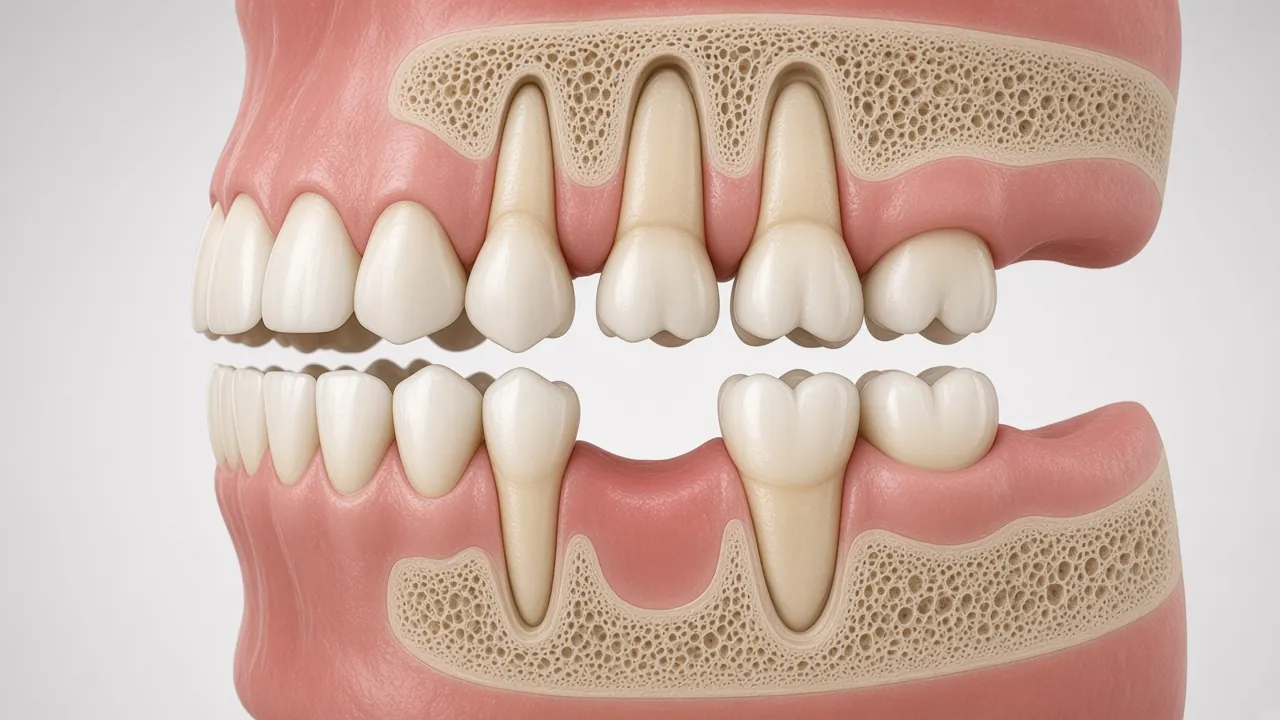
Step 1 When a tooth is lost, a gap is left in the row of teeth.
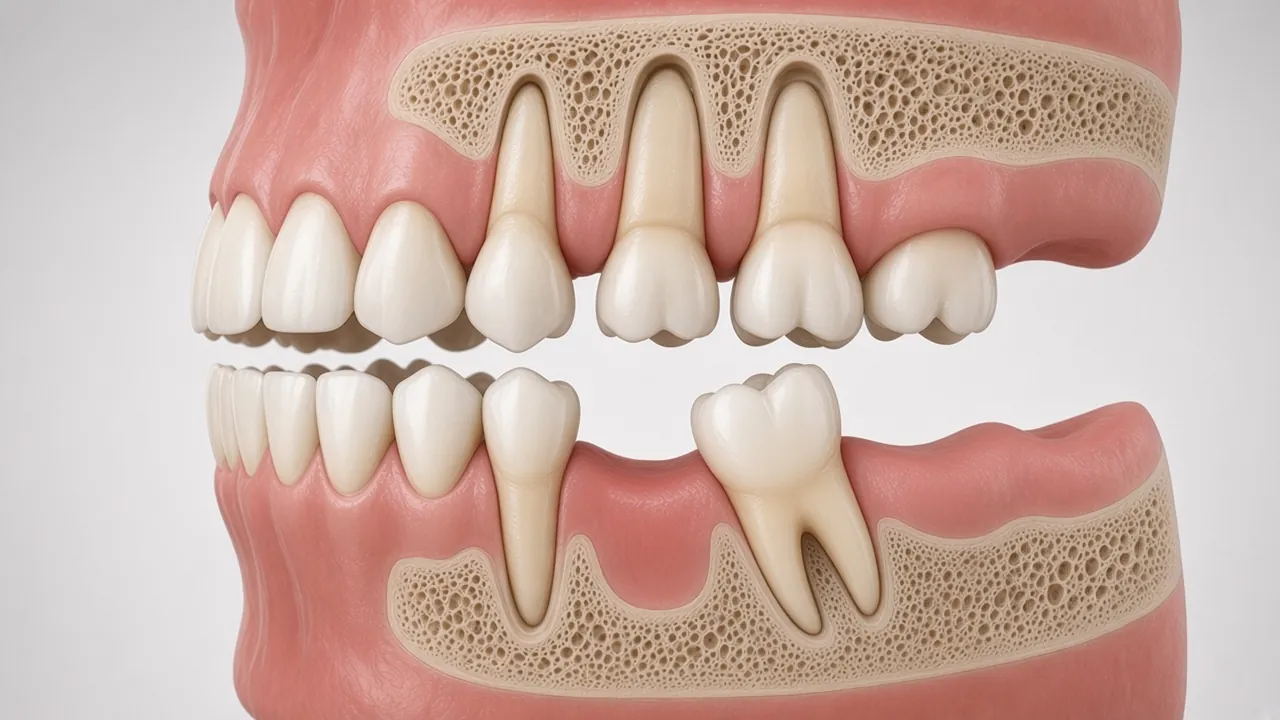
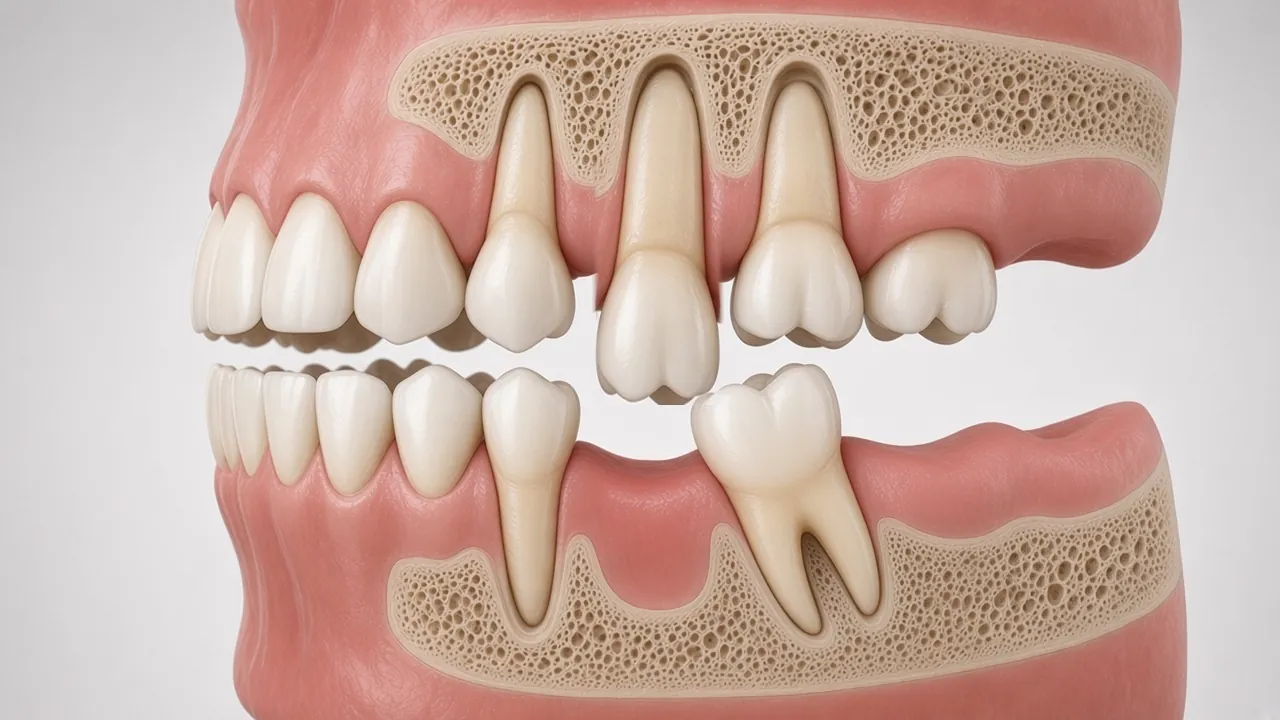
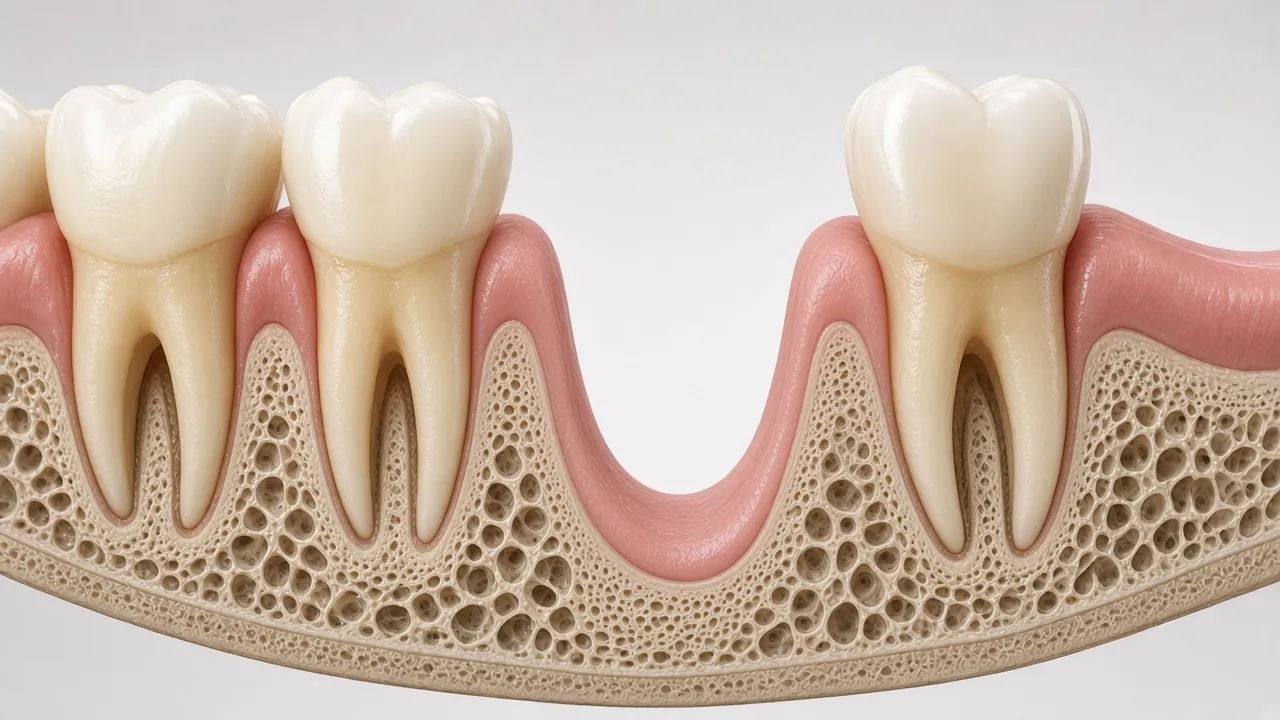
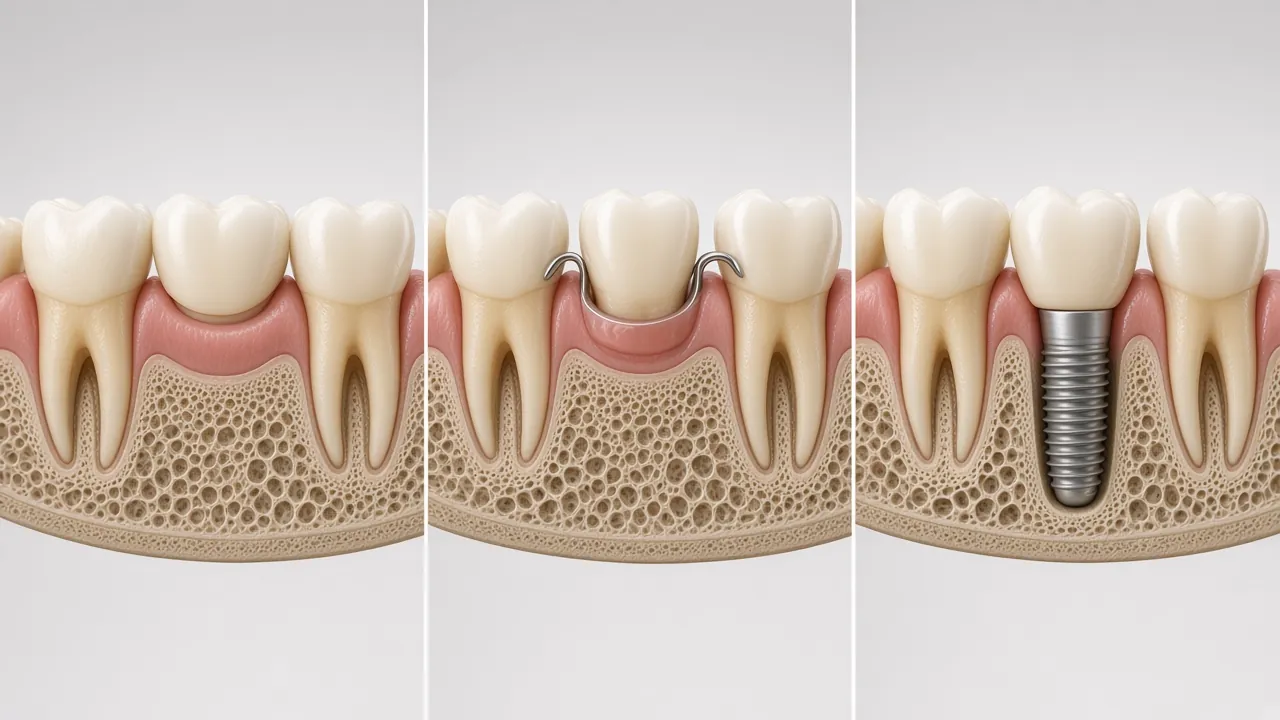
Show transcriptHide transcript (5 steps)
- When a tooth is lost, a gap is left in the row of teeth.
- Over time, nearby teeth can tilt or drift into the space, which can change your bite.
- The tooth above the gap has nothing to bite against, so it can slowly move down into the space.
- Without a tooth root, the jawbone in that area can gradually shrink.
- Options include a bridge, a denture or an implant. Your dentist can talk you through what suits you.
Want personalised advice?
Book a consultation to discuss which option suits you.