
Laser dentistry, where it suits you
Our Fotona LightWalker laser can be used for some fillings and gum treatments. Your dentist will explain whether it suits you, what you may feel and whether you’ll still need a local anaesthetic.
Laser dentistry: what it’s used for
Cavity preparation
Removing decay before a filling, in suitable cases.
Gum reshaping
Reshaping gum tissue, including for some crown lengthening cases.
Root canal disinfection
Laser energy may be used as part of cleaning and disinfecting the root canals.
Periodontal therapy
Supporting treatment of gum disease and pockets around teeth.
The LightWalker combines two wavelengths. Er:YAG energy is absorbed by water in tooth and soft tissue, removing it in micro-pulses. Nd:YAG penetrates deeper into soft tissue for gum treatments and disinfection.
You’ll wear protective glasses, and your dentist will explain what you may feel. You may feel a light tapping sensation.
Laser dentistry in pictures
Choose a topic, then press play or use the arrows. Captions are on (CC).
Light and a fine water spray. The laser uses pulses of light, absorbed by water in the tooth, with a cooling water spray. Some people notice less vibration than with a drill, but experiences vary.
Step by step Laser dentistry: how it works
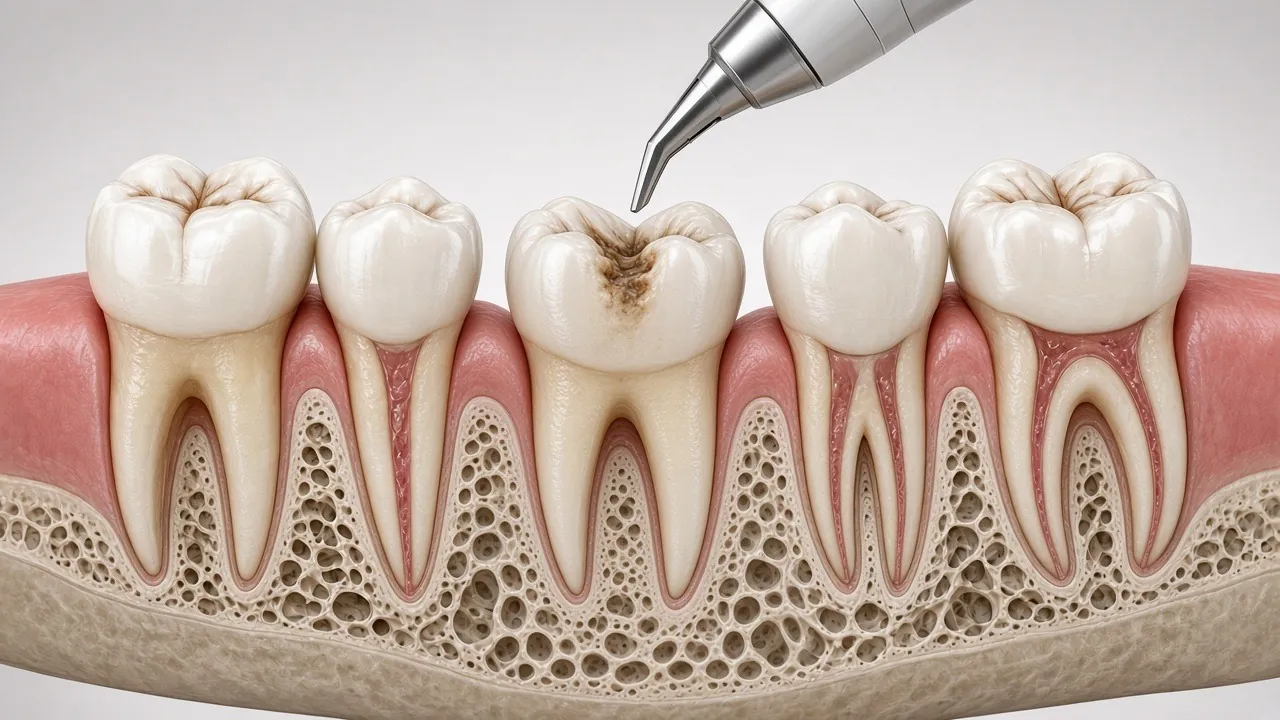
Step 1 The laser handpiece is positioned over a small area of decay.
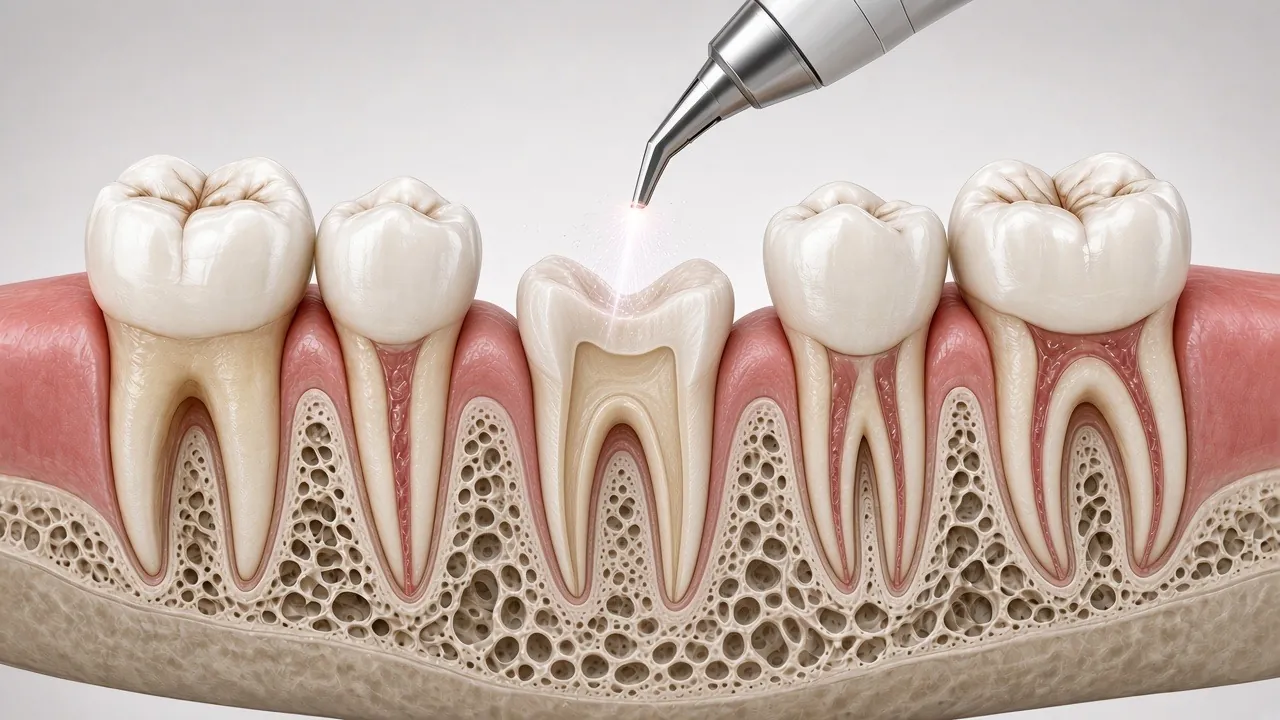
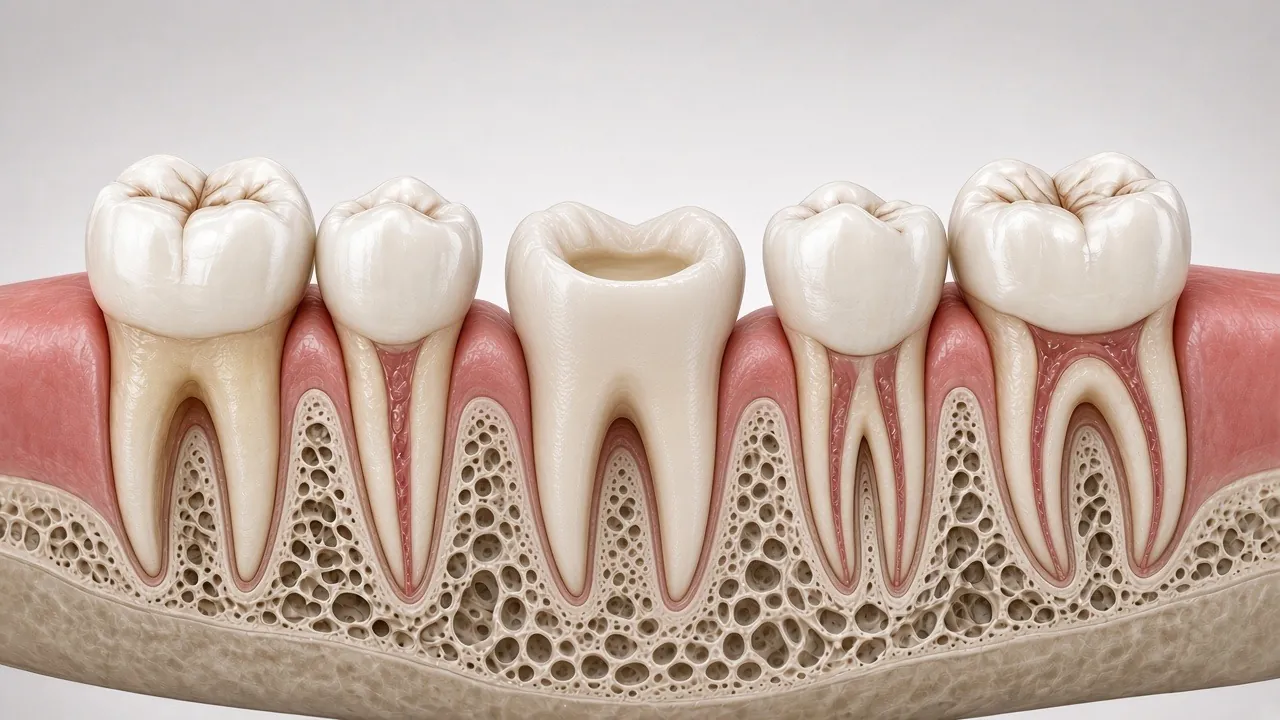
Show transcriptHide transcript (3 steps)
- The laser handpiece is positioned over a small area of decay.
- Pulses of laser light and a fine water spray remove the decay.
- The cleaned area is ready to be filled.
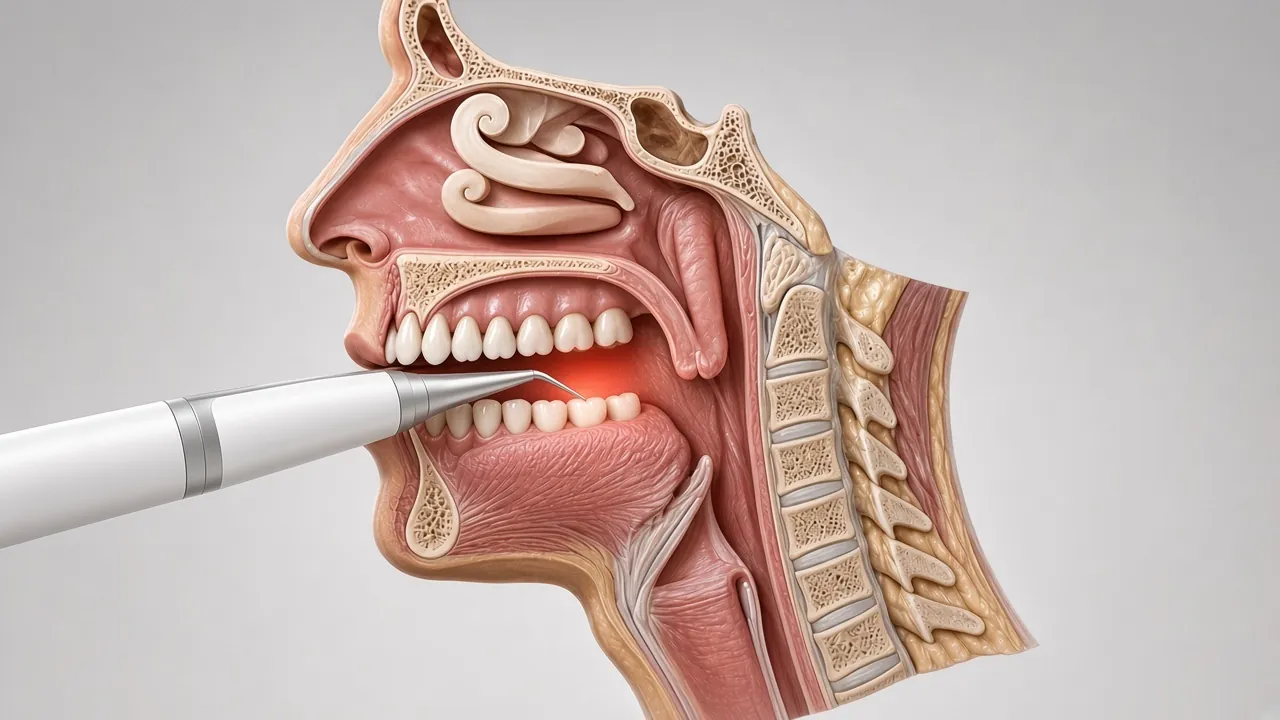
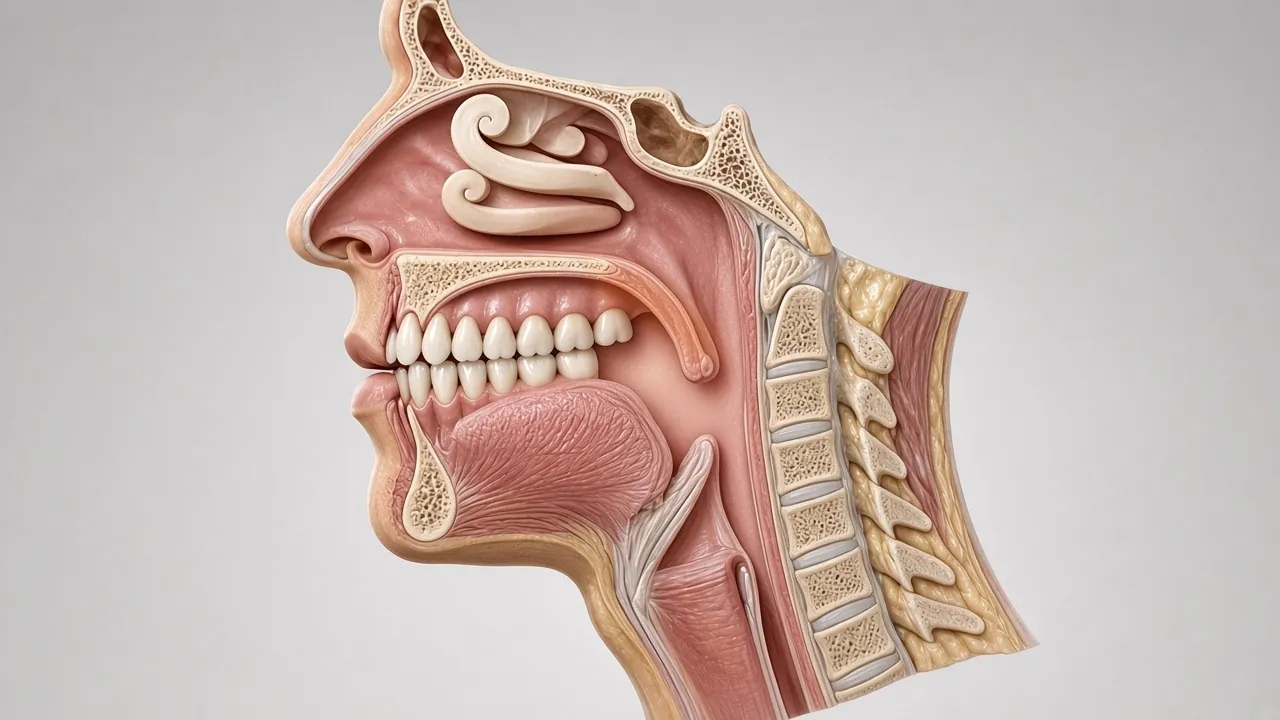
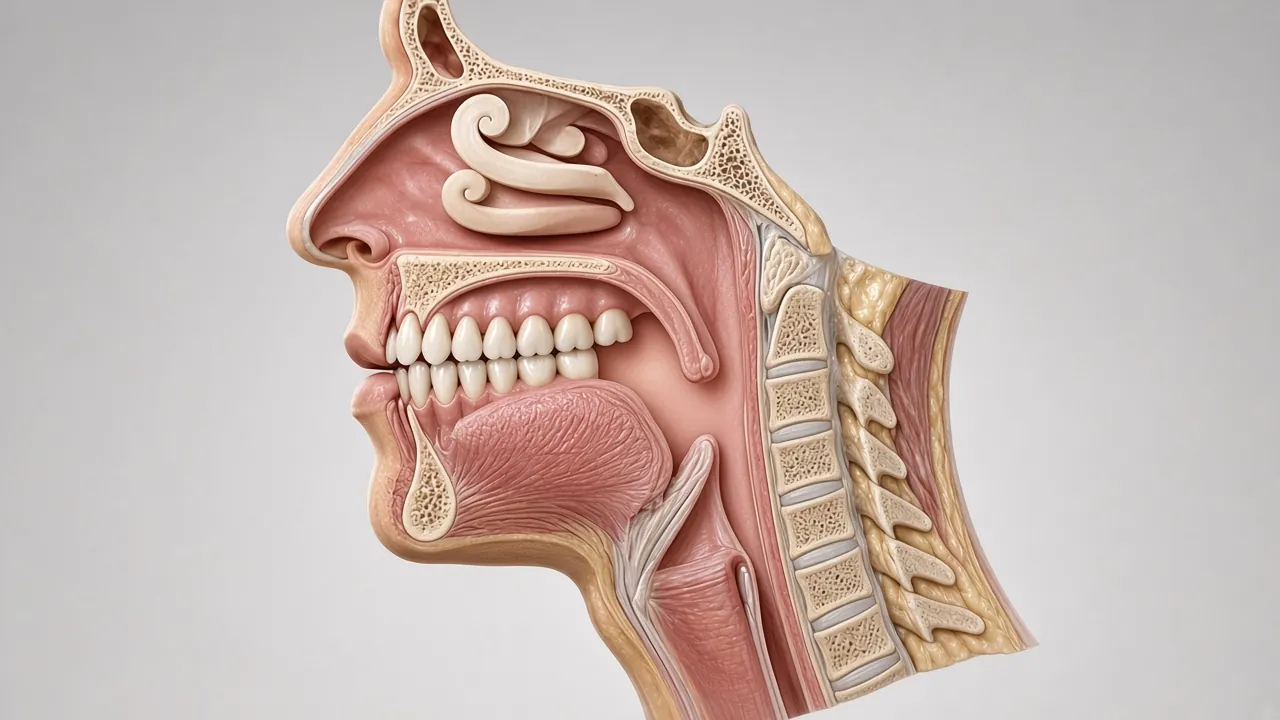
Laser for snoring. A non-surgical laser treatment for snoring. It isn’t suitable for everyone, results vary and may fade, and snoring can be a sign of sleep apnoea, so an assessment comes first.
Step by step Laser snoring treatment: how it works
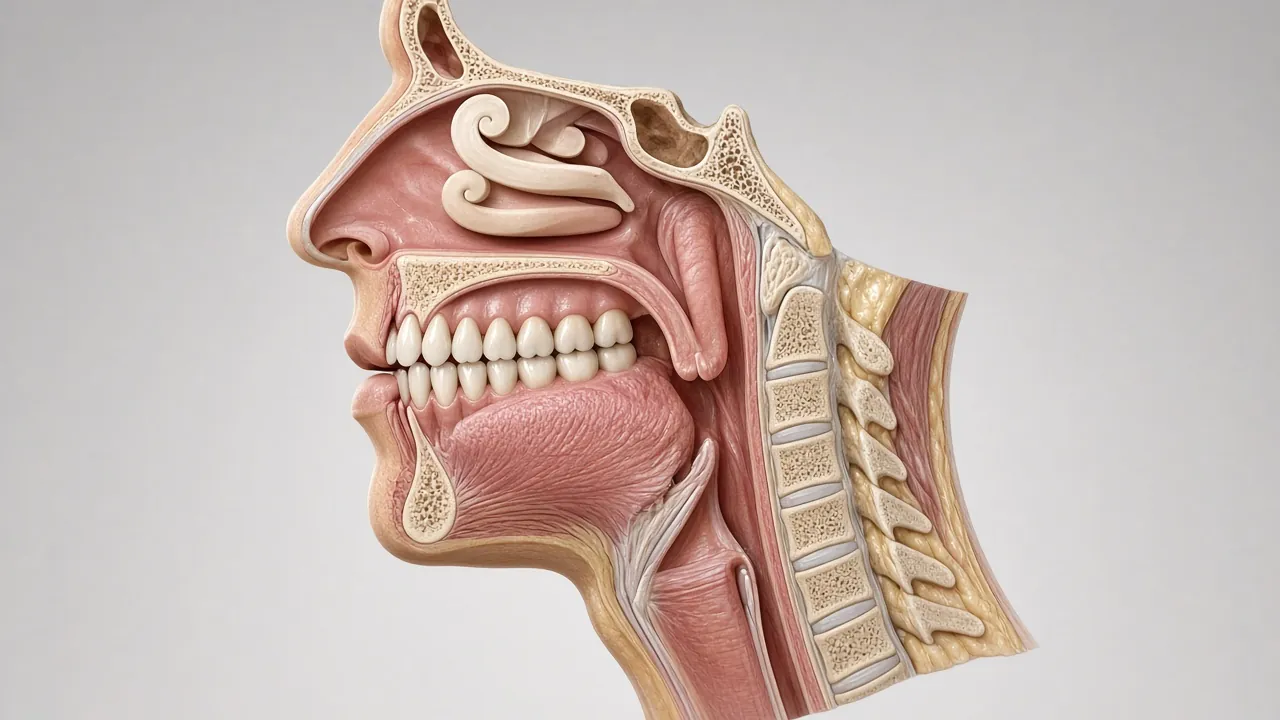
Step 1 Snoring can happen when the soft tissues at the back of the mouth relax and vibrate as you sleep.
Show transcriptHide transcript (4 steps)
- Snoring can happen when the soft tissues at the back of the mouth relax and vibrate as you sleep.
- The laser gently warms the lining of the soft palate and throat, without cutting.
- The warmth can help the tissue firm up gradually. A short course of sessions is usually planned.
- This may leave more room for air. Results vary and can fade. See your dentist for an assessment, as snoring can be a sign of sleep apnoea.
Treatment facts
Plain-language answers to common questions. General information only: your dentist will explain your own options, risks and costs after examining you.
Is it right for me?
It may suit you if
- you need some fillings, gum treatments or soft tissue procedures that suit a laser
- you find the drill uncomfortable (some people notice less vibration)
- you snore and have been assessed for sleep apnoea first
Worth knowing first
- Not every treatment can be done with a laser.
- You may still need local anaesthetic.
- Snoring treatment results vary and may fade.
What happens
Check
Your dentist checks whether a laser suits your treatment.
Eye protection
Everyone in the room wears protective glasses.
Numbing if needed
Local anaesthetic may still be used.
Laser treatment
Light pulses with a cooling water spray are used on the tooth or gum.
Finishing
The tooth or gum is finished as needed, for example with a filling.
Review
We check healing at a later visit if needed.
Times are typical ranges only. Your dentist will give you your own plan.
Recovery and aftercare
The first few days
- Gums may feel tender for a few days after soft tissue treatment.
- Follow the care advice you are given.
Looking after it long term
- Brush and clean between your teeth every day.
- Keep up regular check-ups.
When to call us: ring (08) 9330 7115 if you have pain, a sore spot, sensitivity that isn’t settling, or anything else that worries you.
Risks to know about
Every treatment has some risks. Your dentist will talk you through the ones that apply to you.
- Sensitivity or tenderness after treatment.
- Soft tissue irritation of the gums.
- Eye injury without protective glasses, which is why everyone wears them.
- Not suitable for every case. Some treatments still need a drill.
Other options
Conventional treatment
The same treatment with a drill or other instruments.
Seeing your GP or a sleep specialist
If you snore and have signs of sleep apnoea.
Cost and paying
What affects the cost
- the type of treatment
- how many teeth or areas
- any other treatment on the day
We can’t give an exact price before we examine you. You’ll get a written, itemised plan and estimate before any treatment starts. Health fund rebates depend on your fund and level of cover.
Paying for laser treatment
- Estimate first. For planned treatment you get a written estimate with item numbers before you start.
- Claim on the day. Bring your health fund card. We claim on the spot with Tyro, so you pay only the gap.
- Check your cover. Use the health fund checker to see which item numbers to ask your fund about.
- Ways to pay. EFTPOS and card, including tap and pay. Payment plans are available through Tyro and are tailored to each patient. Ask us about eligibility, terms and any fees before you start. Fees and payments
Any surgical or invasive procedure carries risks. Before proceeding, you should seek a second opinion from an appropriately qualified health practitioner. Suitability, treatment time and results vary from person to person.
Sources (checked 21 October 2026)
Video transcript and description
This 2 minute 15 second video has no spoken narration. It plays music with on-screen titles naming each piece of equipment.
- 0:00 MODJAW: a clinician demonstrates digital jaw-movement tracking on a screen.
- 0:09 Carestream CS 9600: a patient stands in the 3D CBCT imaging unit.
- 0:18 Fotona LightWalker: the dental laser in use in a treatment room.
- 0:27 PRF: a centrifuge used to prepare platelet-rich fibrin.
- 0:36 Leica microscope: the dental operating microscope.
- 0:45 Tekscan T-Scan: digital bite (occlusion) analysis.
- 0:54 Mectron dentistry instruments, and in-house 3D printing equipment.
- 1:03 CEREC MC X5: the in-house milling unit.
- 1:12 Zoom teeth whitening: whitening gel and LED light, with the lips held back by a retractor.
- 1:21 Invisalign: clear aligners.
- 1:30 KaVo DIAGNOcam: a near-infrared camera for detecting decay.
- 1:39 Tersano Lotus Pro: the aqueous ozone disinfection system.
- 1:48 Digital impressions: an intraoral scan shown on a laptop.
- 1:57 CEREC Primescan: an intraoral scan on the acquisition unit.
- 2:06 EMS Airflow: the cleaning system in use.
What to know about laser treatment
- Not for every treatmentLarge fillings, crowns and some other situations still need conventional instruments.
- AnaestheticSome procedures may need less local anaesthetic, but many still need it. Your dentist will discuss this with you.
- RisksLike any treatment, laser treatment has risks, which your dentist will explain before you decide.
Our principal dentist, Dr Ramanjit Kaur, holds a Mastership in Laser Dentistry (LAHA, Slovenia).
Does laser dentistry hurt?
Sensations vary from person to person. Some procedures can be done without a local anaesthetic, and some still need one. Tell us if you’re anxious and we’ll talk you through your options.
Is it safe?
Dental lasers are used widely. You and your dentist wear protective eyewear, and the laser is used according to clinical protocols. Like all treatments, it has risks that your dentist will discuss.
Can laser be used for every filling?
No. Large or existing metal fillings, crowns and some situations still need conventional instruments. Your dentist will recommend the best approach.
Questions about laser treatment?
Ask whether Fotona LightWalker laser treatment could suit you.