
Root canal treatment, to help save a tooth
Root canal (endodontic) treatment removes infected or inflamed pulp from inside a tooth, cleans and seals the canals, and protects the tooth with a filling or crown.
This picture is hidden in anxiety-friendly mode.
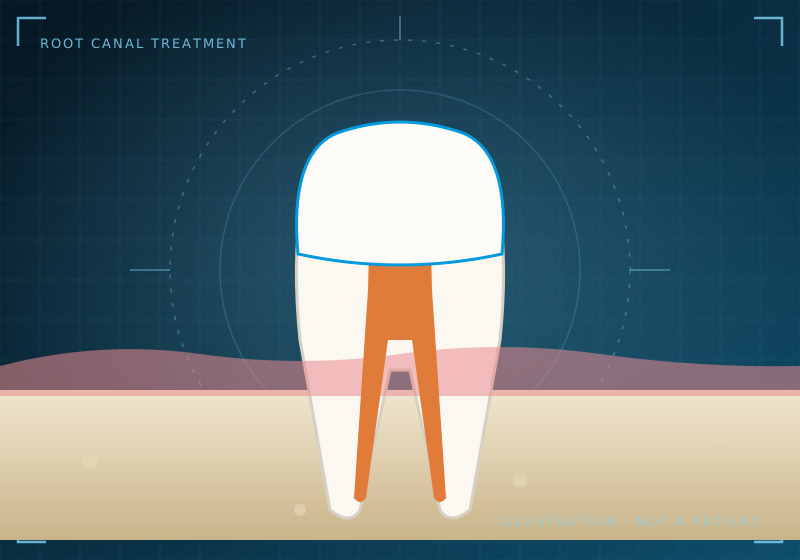
What is root canal treatment?
Inside each tooth is soft tissue called the pulp. If it becomes infected or badly inflamed, root canal treatment cleans it out, disinfects the inside of the tooth and seals it, so you can usually keep your own tooth.
Afterwards, back teeth often need a crown to protect them from cracking.
Root canal treatment in pictures
Press play or use the arrows. Captions are on (CC).
Saving an infected tooth. How the inside of the tooth is cleaned, sealed and then protected.
This animation is hidden in anxiety-friendly mode.
Step by step Root canal treatment: how it works
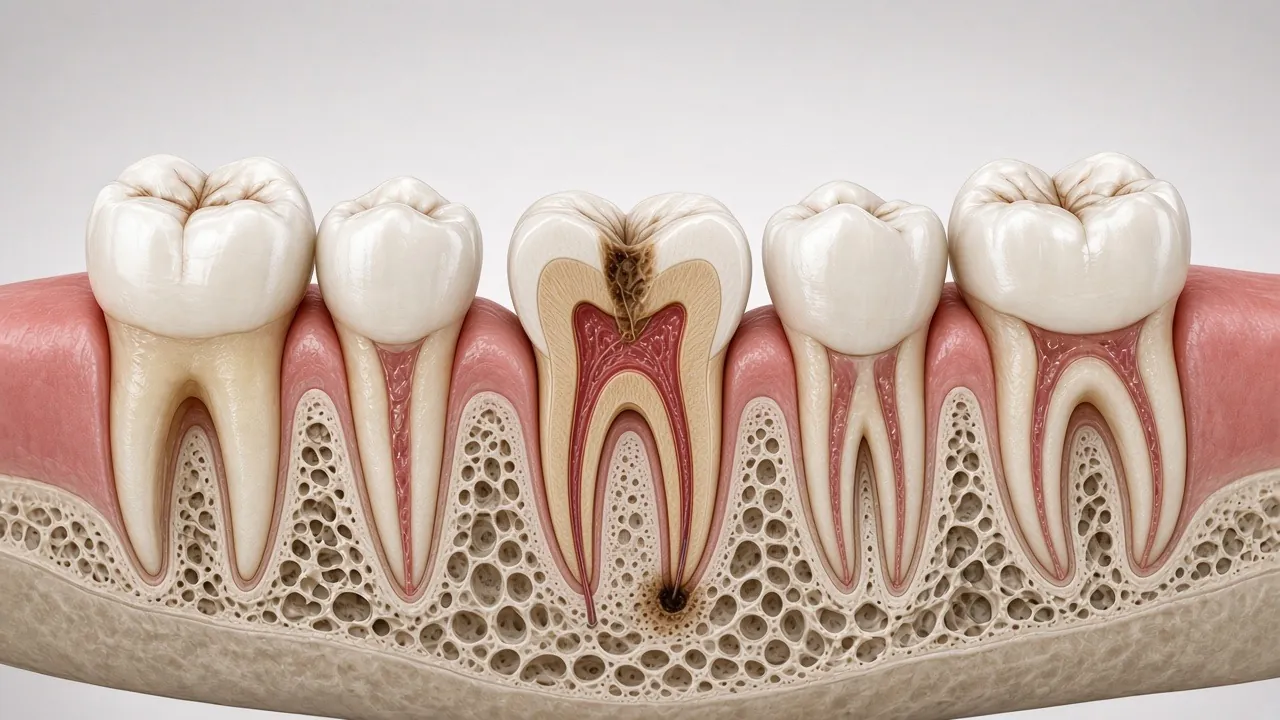
Step 1 Decay has reached the pulp, the soft tissue inside the tooth, causing inflammation or infection.
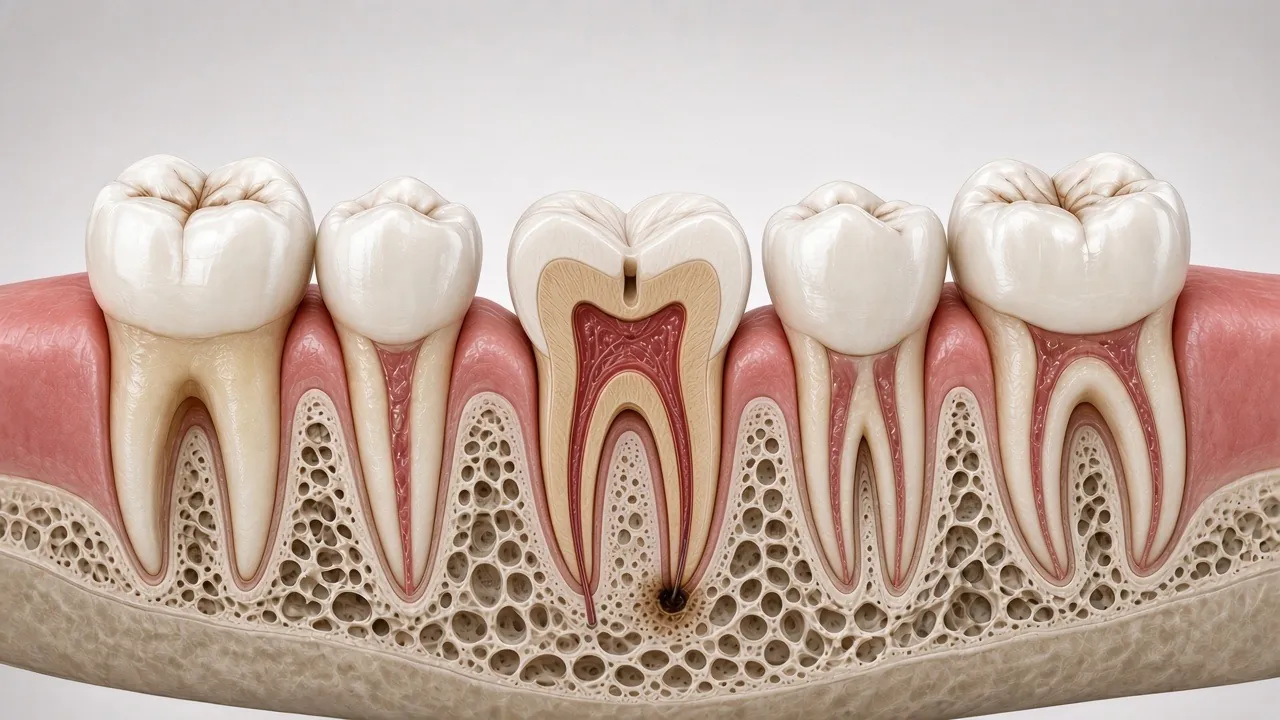
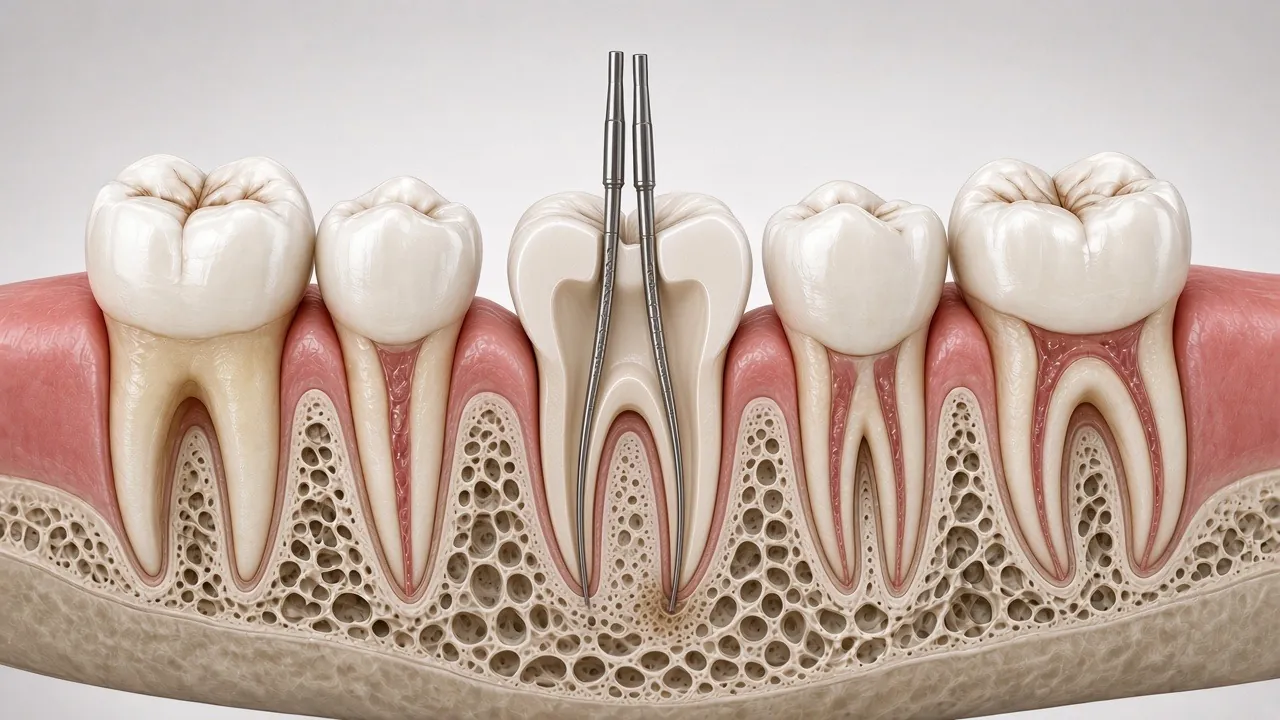
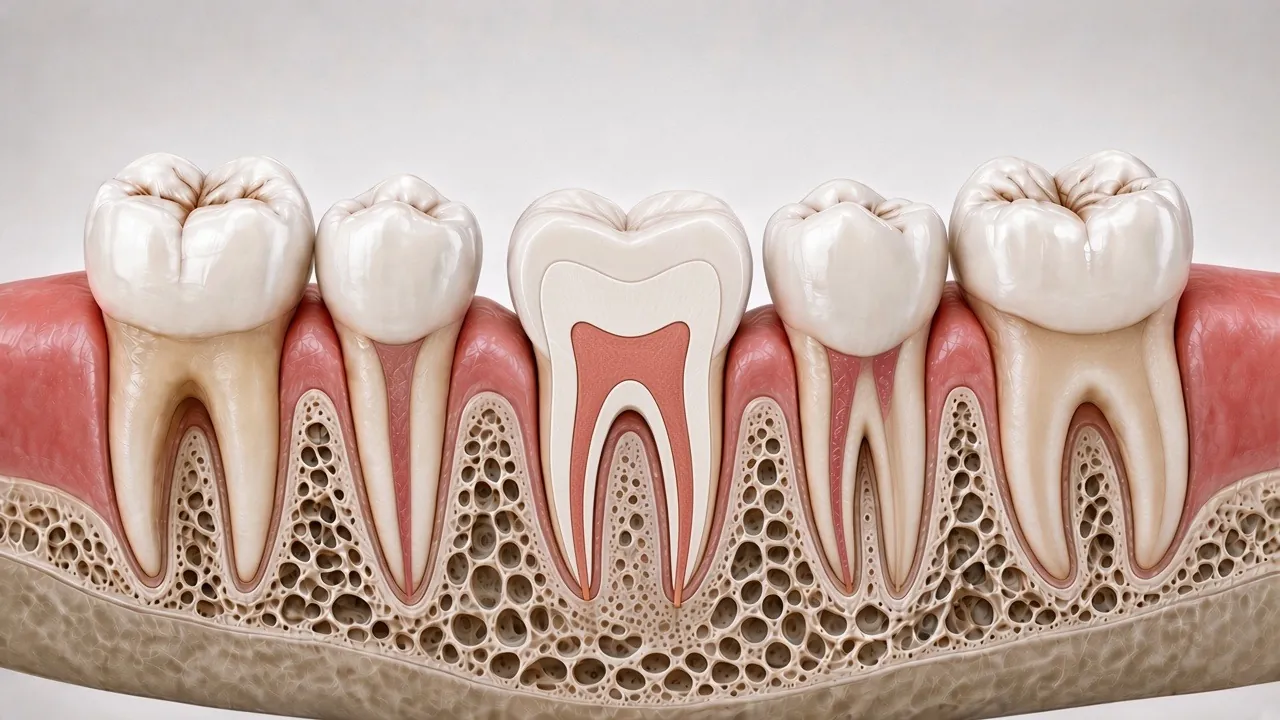
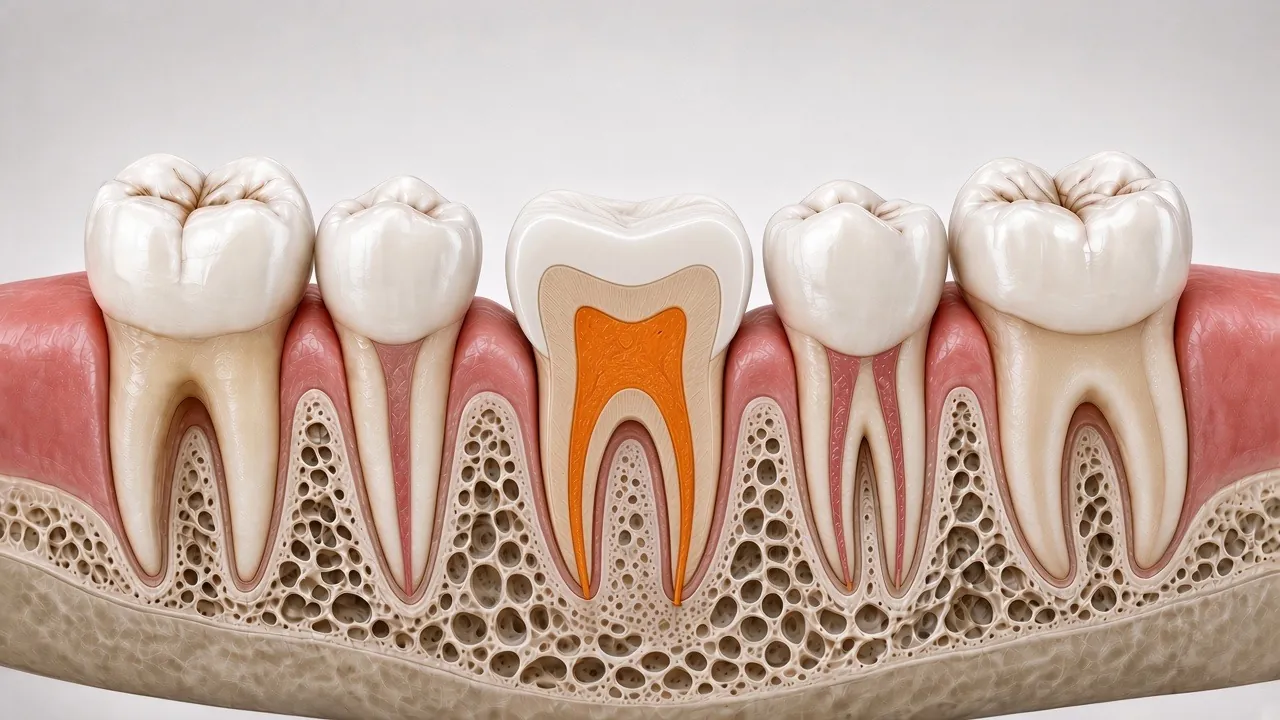
Show transcriptHide transcript (5 steps)
- Decay has reached the pulp, the soft tissue inside the tooth, causing inflammation or infection.
- The tooth is numbed, and a small opening is made in the top.
- The pulp is removed, and the canals are cleaned, shaped and disinfected.
- The canals are filled and sealed with a rubber-like material (gutta-percha).
- A filling, and often a crown, protects the tooth.
Treatment facts
Plain-language answers to common questions. General information only: your dentist will explain your own options, risks and costs after examining you.
Is it right for me?
It may suit you if
- you have a lasting toothache, or pain when you bite
- a tooth stays sensitive to hot or cold long after the drink is gone
- there is swelling or a pimple on the gum near a tooth
- a tooth has darkened after an injury, or decay has reached the nerve
Worth knowing first
- Not every tooth can be saved. Cracks below the gum or very little remaining tooth can make it unsuitable.
- A crown is often needed afterwards, which adds visits and cost.
- Antibiotics alone don’t fix an infected tooth.
What happens
Check and X-rays
Your dentist tests the tooth and takes X-rays to see the roots and any infection.
Numbing
Local anaesthetic numbs the tooth. A thin rubber sheet (rubber dam) keeps it clean and dry.
Cleaning the canals
The infected pulp is removed and the canals are cleaned, shaped and disinfected.
often 60–90 minutes a visitFilling and sealing
The canals are filled and sealed. A temporary or permanent filling closes the top.
1–3 visits in totalCrown
For many back teeth, a crown is placed within a few weeks to protect the tooth from cracking.
Review
We check how the tooth has healed at later visits, sometimes with an X-ray.
Times are typical ranges only. Your dentist will give you your own plan.
Recovery and aftercare
The first few days
- The tooth may feel tender for a few days. Over-the-counter pain relief usually helps.
- Avoid chewing hard food on that side until the final filling or crown is in place.
- Numbness wears off after a few hours. Take care not to bite your lip or cheek.
Looking after it long term
- Have the crown or final filling done when advised. A tooth left with only a temporary filling can crack or get reinfected.
- Brush twice a day, clean between your teeth and keep up regular check-ups.
When to call us: ring (08) 9330 7115 if you have heavy bleeding, pain or swelling that is getting worse, or a fever. If you have trouble breathing or swallowing, call 000.
Risks to know about
Every treatment has some risks. Your dentist will talk you through the ones that apply to you.
- Ongoing or returning infection which may need the treatment redone or a small surgical procedure.
- A canal that is hard to find or clean because roots can be curved, narrow or blocked.
- A broken instrument left inside the canal. This is uncommon.
- Tooth fracture, especially without a crown.
- Losing the tooth if treatment doesn’t work. Removing the tooth may then be needed.
- Tenderness or a flare-up for a few days after a visit.
Ways risk is lowered: X-rays before and during treatment, a rubber dam, careful cleaning of the canals, and a crown where advised.
Other options
Removing the tooth
Usually quicker, but leaves a gap. You may later want an implant, bridge or denture to fill it.
Waiting and watching
Only suitable if there is no infection. An infected tooth usually gets worse without treatment.
Cost and paying
What affects the cost
- which tooth it is (back teeth have more canals)
- how many visits are needed
- X-rays and any temporary fillings
- a crown afterwards
- any referral to a specialist (endodontist)
We can’t give an exact price before we examine you. You’ll get a written, itemised plan and estimate before any treatment starts. Health fund rebates depend on your fund and level of cover.
Paying for root canal treatment
- Estimate first. For planned treatment you get a written estimate with item numbers before you start.
- Claim on the day. Bring your health fund card. We claim on the spot with Tyro, so you pay only the gap.
- Check your cover. Use the health fund checker to see which item numbers to ask your fund about.
- Ways to pay. EFTPOS and card, including tap and pay. Payment plans are available through Tyro and are tailored to each patient. Ask us about eligibility, terms and any fees before you start. Fees and payments
Any surgical or invasive procedure carries risks. Before proceeding, you should seek a second opinion from an appropriately qualified health practitioner. Suitability, treatment time and results vary from person to person.
Common questions
Is root canal treatment painful?
The tooth is numbed with local anaesthetic. Many people say it feels similar to having a filling. Tenderness for a few days afterwards is common.
How many visits will I need?
It may take one or more visits depending on the tooth and the infection.
Will I need a crown afterwards?
Often, especially for back teeth, because a crown helps protect a tooth that has had root canal treatment.
You might also like to read
Information adapted from our main website, myareedental.com. General information only; it isn’t a substitute for advice from your dentist. Fees are confirmed in a written treatment plan after your examination.
Your next step
Request an appointment online, call or text our team.