
Full mouth rehabilitation, one plan, step by step
Full mouth rehabilitation rebuilds or restores many teeth across both jaws. It combines treatments, such as gum care, fillings, crowns, bridges and implants, into one staged plan.
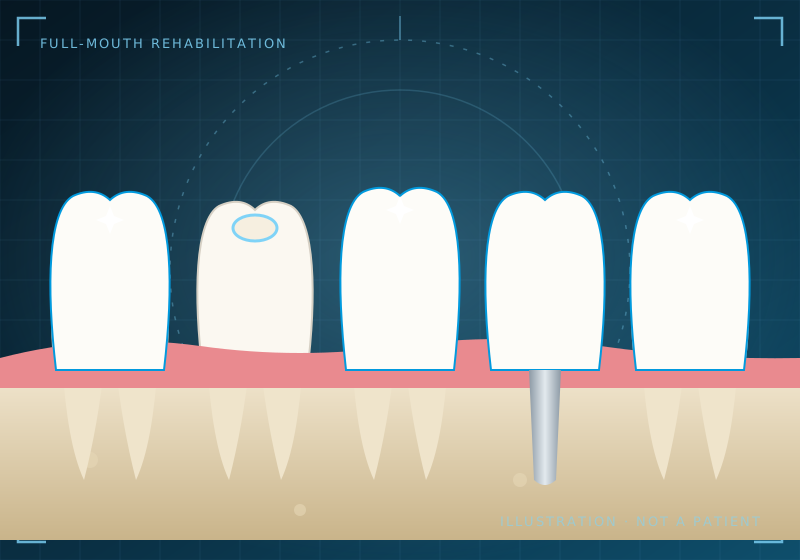
What is full mouth rehabilitation?
Full mouth rehabilitation is a staged plan to restore many teeth when they are badly worn, broken, decayed or missing. It may combine gum care, fillings, root canal treatment, crowns, implants and dentures.
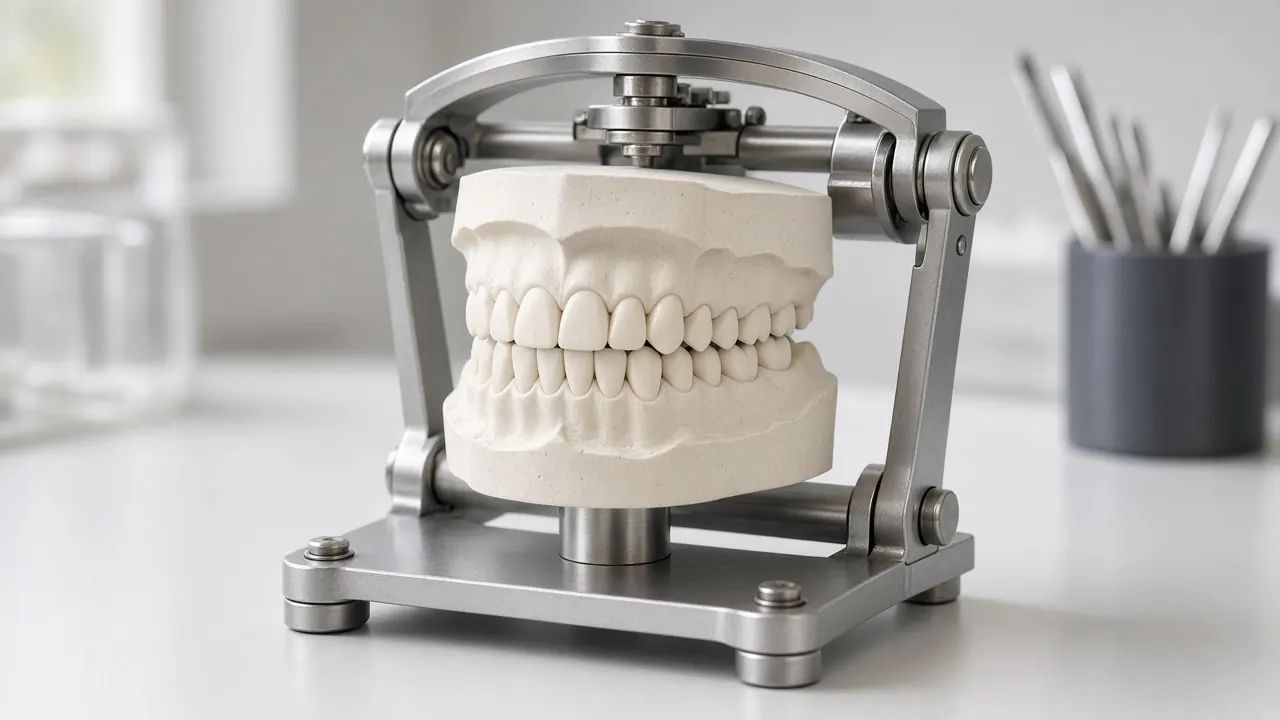
Full mouth rehabilitation in pictures
Press play or use the arrows. Captions are on (CC).
A staged plan. How many treatments fit together into one plan.
Step by step Full mouth rehabilitation: how it works
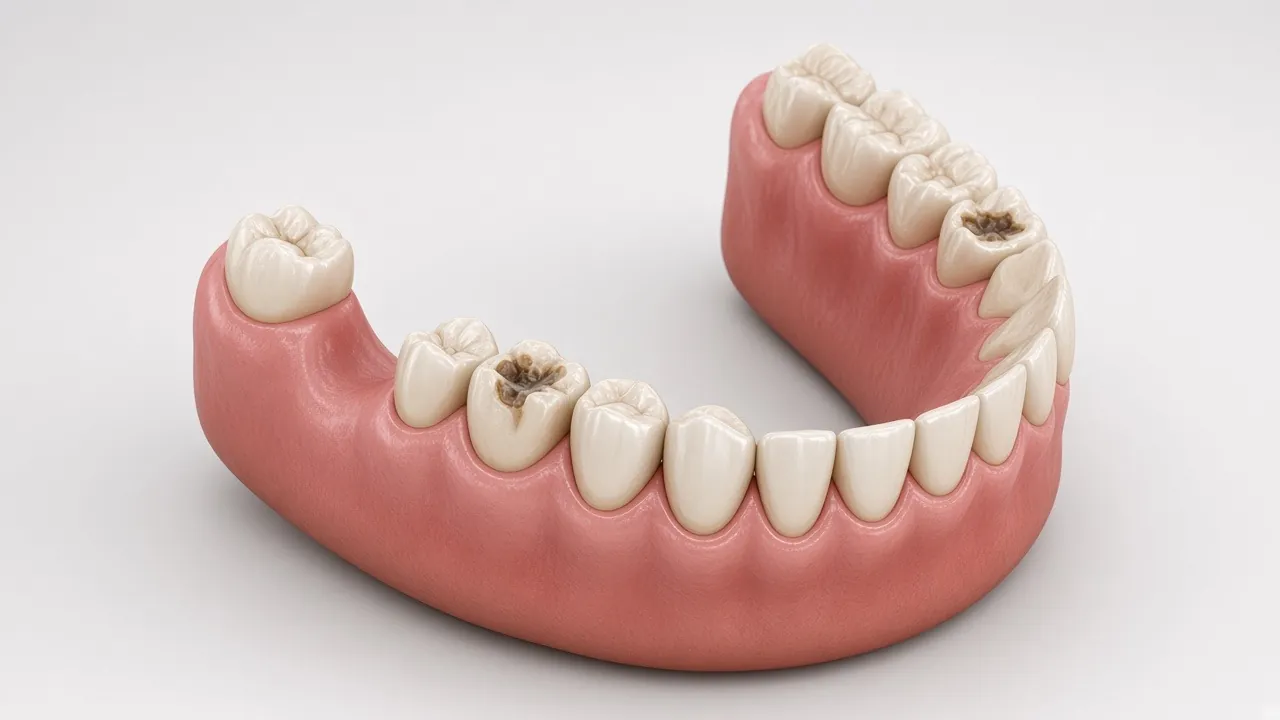
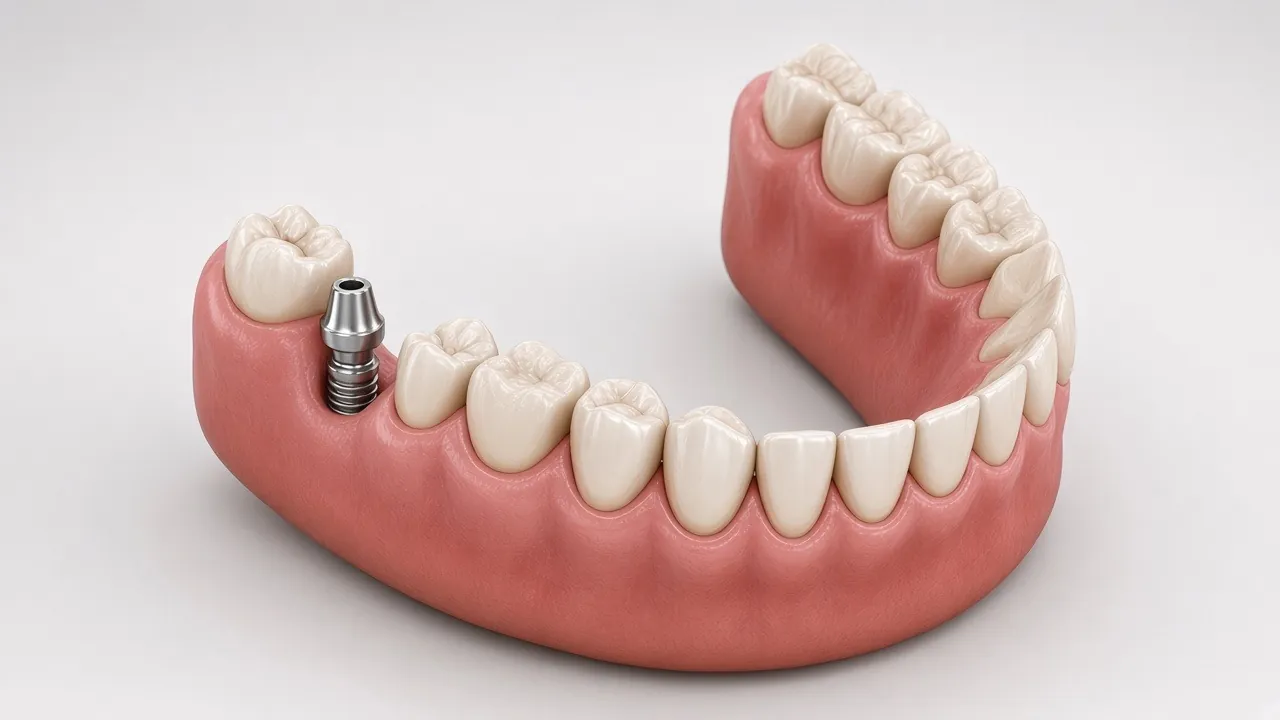
Step 1 Several problems across the mouth, such as worn, broken, decayed or missing teeth.
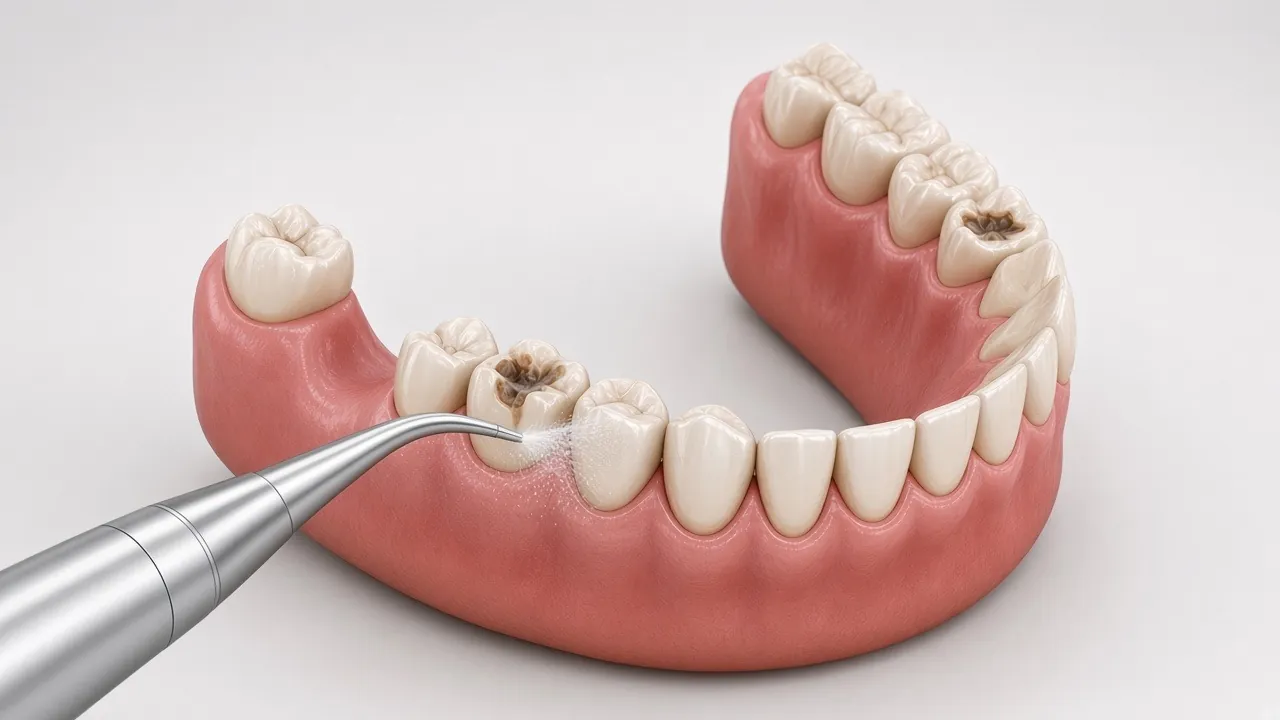
Show transcriptHide transcript (4 steps)
- Several problems across the mouth, such as worn, broken, decayed or missing teeth.
- Gum health is treated first.
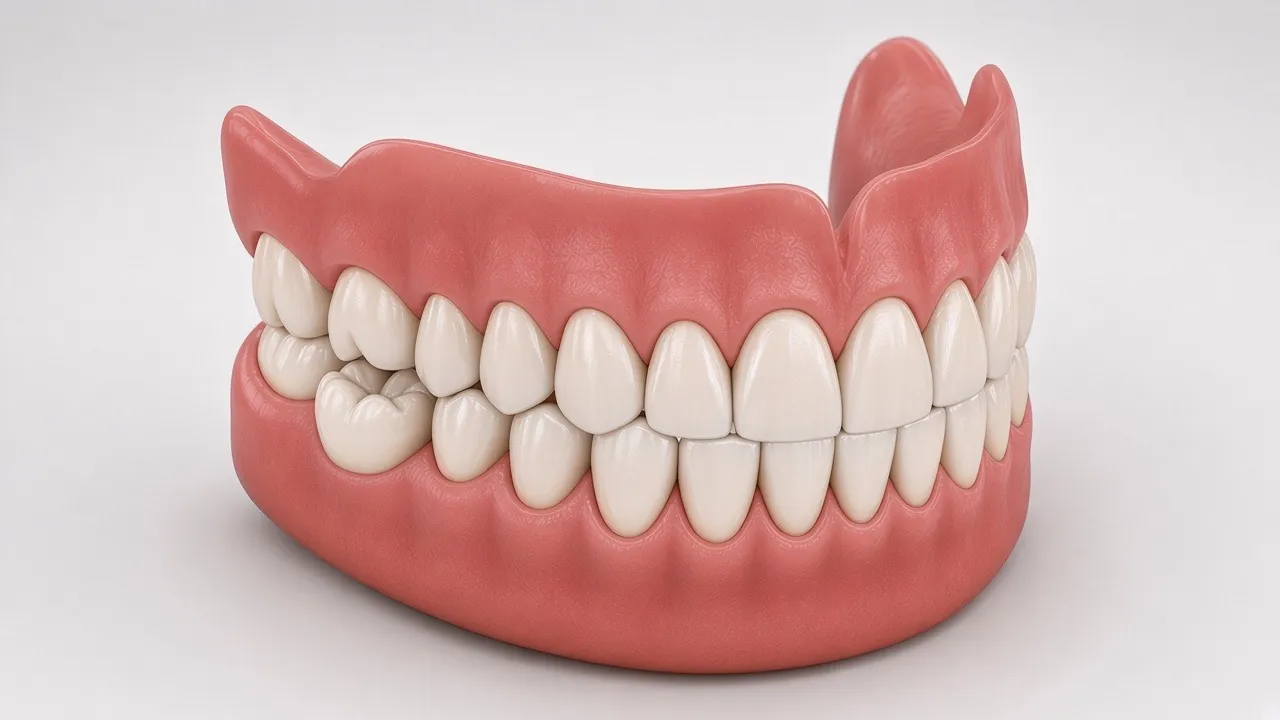
- Teeth are rebuilt in planned stages, with fillings, crowns, bridges or implants.
- Your bite is checked and reviewed over time.
Treatment facts
Plain-language answers to common questions. General information only: your dentist will explain your own options, risks and costs after examining you.
Is it right for me?
It may suit you if
- many teeth are worn, broken or missing
- you have trouble chewing or jaw pain
- you want a long-term plan rather than one tooth at a time
Worth knowing first
- Treatment is staged and can take months.
- It may include surgery.
- Your health, gums and habits like grinding affect the plan.
What happens
Consultation
We talk about your concerns, health and goals.
Records
X-rays, a 3D scan, photos and models of your bite.
Written plan
Stages, timings and an itemised estimate.
Getting healthy first
Gum treatment, decay and any extractions.
Rebuilding
Crowns, implants, bridges or dentures, often with temporaries first.
often over several monthsMaintenance
Regular reviews, and a night guard if advised.
Times are typical ranges only. Your dentist will give you your own plan.
Recovery and aftercare
The first few days
- Recovery depends on each stage. We’ll give you advice for each one.
Looking after it long term
- Clean every day, including around crowns, bridges and implants.
- Wear a night guard if advised.
- Keep up regular check-ups and cleans.
When to call us: ring (08) 9330 7115 if you have heavy bleeding, pain or swelling that is getting worse, or a fever. If you have trouble breathing or swallowing, call 000.
Risks to know about
Every treatment has some risks. Your dentist will talk you through the ones that apply to you.
- The combined risks of each treatment, such as sensitivity, infection or nerve injury.
- Long treatment time and several visits.
- Bite changes that take time to get used to.
- Maintenance, repairs and replacements over time.
Ways risk is lowered: a detailed plan, staged treatment, temporaries to test the bite and regular reviews.
Other options
Treating one area at a time
As problems come up.
Dentures
A removable option for many missing teeth.
Implant bridge
A fixed option for a full arch.
Cost and paying
What affects the cost
- the number and type of treatments
- materials
- implants or surgery
- temporaries
- how many visits
We can’t give an exact price before we examine you. You’ll get a written, itemised plan and estimate before any treatment starts. Health fund rebates depend on your fund and level of cover.
Paying for full mouth rehabilitation
- Estimate first. For planned treatment you get a written estimate with item numbers before you start.
- Claim on the day. Bring your health fund card. We claim on the spot with Tyro, so you pay only the gap.
- Check your cover. Use the health fund checker to see which item numbers to ask your fund about.
- Ways to pay. EFTPOS and card, including tap and pay. Payment plans are available through Tyro and are tailored to each patient. Ask us about eligibility, terms and any fees before you start. Fees and payments
Any surgical or invasive procedure carries risks. Before proceeding, you should seek a second opinion from an appropriately qualified health practitioner. Suitability, treatment time and results vary from person to person.
Common questions
How long does it take?
It is usually staged over several months, depending on which treatments are needed and how you heal.
Will I get a written plan?
Yes. You’ll receive a written treatment plan and estimate before treatment starts, so you can take your time to decide.
Can treatment be spread out?
Often, yes. Plans can be staged to suit your health, priorities and budget.
You might also like to read
Information adapted from our main website, myareedental.com. General information only; it isn’t a substitute for advice from your dentist. Fees are confirmed in a written treatment plan after your examination.
Your next step
Request an appointment online, call or text our team.